


Industrial embedded storage validation: tests that reduce downtime risk
Industrial embedded storage validation should prove more than basic functionality. This guide explains how to test power-loss recovery, data integrity,...
We are here to help
Have a question or need guidance? Whether you’re searching for resources or want to connect with an expert, we’ve got you covered. Use the search bar on the right to find what you need.


Gartner recently offered a simple way to think about physical AI: if you can throw it out the window, it’s physical AI. The phrasing is playful. The implication is serious.
Artificial intelligence is no longer confined to software running in data centers. It is being embedded into machines, vehicles, robotics platforms, medical devices, and industrial systems that interact directly with physics, regulations, and long operational lifecycles. And the signals suggesting this shift is speeding up are now coming from multiple directions at once.
NVIDIA has framed physical AI as the next frontier, pointing to robotics, digital twins, and synthetic data as essential for training systems that must operate under real-world constraints. Tesla’s roadmap centers on autonomy and robotics at scale, requiring not only capable models but purpose-built compute and resilient edge systems. Gartner has elevated physical AI to a top strategic technology trend for 2026, bringing governance, safety, validation, and lifecycle management into boardroom conversations.
When platform builders, deployers, and enterprise analysts converge on the same idea, it is usually a sign that a technology is moving from experimentation to industrialization. That is where physical AI is today.
Model intelligence defined the first phase of AI. The second focused on scaling that intelligence in the cloud. The emerging phase is about deploying AI into physical environments where the constraints are different.
In digital systems, failures are often recoverable. Services restart, the system redistributes workloads, and it moves on. In physical environments, a failure can disrupt operations, trigger compliance issues, or create genuine safety risks. As intelligence becomes embodied in machines, tolerance for unpredictability narrows significantly.
This creates a tension at the heart of physical AI. Models are probabilistic by design: they reason through inference and likelihood, and that is part of what makes them powerful. But the infrastructure beneath those models cannot share that characteristic, it must behave predictably, with strong guarantees around data integrity in embedded systems.
AI can tolerate probabilistic reasoning. The physical world cannot tolerate probabilistic infrastructure.
As physical AI scales, this tension becomes structural. Vehicles generate continuous sensor data. Robotics platforms log telemetry for traceability. Industrial systems must update models across long operational lifecycles. Medical and aerospace environments operate under strict validation and audit requirements.
AI workloads become write-intensive, placing sustained pressure on storage endurance and data integrity: challenges that are already emerging in modern flash-based systems. At this stage, the limiting factor is no longer model capability alone.
You can train intelligence in months. Earning deployment-grade trust takes years.
Once AI-enabled systems are certified and deployed in regulated industries, the physical AI data layer becomes deeply embedded. Replacing it is not a simple vendor swap. It is a technical, regulatory, and operational undertaking. Validation cycles, audit requirements, and integration depth create real switching costs. Infrastructure that once operated quietly in the background moves into the critical path.
Physical AI is not simply about smarter machines. It is about machines that can operate dependably across power interruptions, environmental stress, regulatory audits, and multi-year lifecycles. This makes things more difficult for everything under the model.
Every major computing wave has eventually confronted the realities of deployment. Cloud computing requires additional security and orchestration models. Mobile computing demanded breakthroughs in efficiency and power management. Physical AI requires deterministic, resilient infrastructure capable of withstanding physics, regulations, and time.
The next phase of AI will depend not only on system intelligence but also on their real-world dependability. The conversation must expand beyond parameters and benchmarks to include trust, durability, and system integrity.
Infrastructure may not always be the headline. But as intelligence becomes embodied in machines, the foundations beneath it become strategically visible , and increasingly, strategically decisive.
The industrialization of physical AI has begun.
Talk to our team about engineering the data layer beneath your physical AIThe infrastructure gap holding physical AI back
Models to systems: AI engineering’s next phase
The physical AI data layer: where reliability becomes economics
RELATED ARTICLES
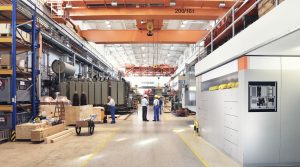
Industrial embedded storage validation should prove more than basic functionality. This guide explains how to test power-loss recovery, data integrity,...

Embedded systems are rapidly becoming mission-critical infrastructure. At Embedded World 2026, five themes dominated: the rise of safety-critical deployments, the...
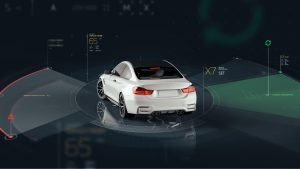
In software-defined vehicles, zonal architecture storage requirements are really requirements for predictable behavior under stress — not peak speed. Here's...

AI capability is no longer the limiting factor in physical AI. As intelligence moves into machines, vehicles, and industrial systems,...
Suggested content for: