


Deterministic storage: the overlooked half of physical AI reliability
Physical AI teams treat networking determinism as a first-class engineering problem. Storage determinism rarely gets the same scrutiny, and that...
We are here to help
Have a question or need guidance? Whether you’re searching for resources or want to connect with an expert, we’ve got you covered. Use the search bar on the right to find what you need.


For years, the AI conversation has centered on model performance: parameter counts, benchmark scores, training compute. These advances are real, but they tell only part of the story.
A second, quieter transformation is now underway, and it will shape the next decade of AI deployment more than any model breakthrough. AI is leaving the data center. It is being embedded in autonomous vehicles, industrial automation platforms, surgical robotics, and medical devices. And as it moves into the physical world, the rules change completely.
The gap that is holding physical AI back is not in the models. It is in the physical AI infrastructure beneath them.
In a cloud environment, failure is manageable: a service restarts, a request retries, compute scales elastically. Infrastructure is abstracted from consequences.
Physical AI operates under an entirely distinct set of constraints. These systems run in real time, under strict hardware limitations, functional safety certification requirements, and regulatory oversight. When storage fails in an autonomous vehicle or an industrial control system, the consequences are not a slow-loading page. They are operational, financial, or safety-critical.
This is the defining tension of physical AI: the intelligence layer is probabilistic by nature, while the infrastructure beneath it must be anything but. Infrastructure decisions made at the architecture stage carry implications, technical and commercial, that persist across the entire product lifecycle. Most organizations building physical AI systems are not treating them that way yet.
Physical AI workloads are write-intensive and continuous. Autonomous vehicles stream dense sensor and telemetry data without pause; industrial automation systems capture operational logs for traceability; models require over-the-air updates; and compliance frameworks demand complete, tamper-evident audit trails. The pressure on storage is relentless and it never stops.
This sustained pressure on flash memory makes embedded storage an architectural decision, not a procurement one. Getting it right requires:
In cloud infrastructure, the platform often solves these concerns. The hardware and firmware layers in embedded physical AI systems must own these concerns, and they must validate them once to ensure they hold across years of field deployment. That is a fundamentally different standard, and the gap between what teams assume and what the hardware must actually deliver is where physical AI programs most often stall.
Automotive, medical, industrial, aerospace, and defence AI systems each operate under their own certification and regulatory frameworks. They determine whether a product reaches the market, and whether it stays there.
Once a system is certified and deployed in the field, replacing core embedded storage infrastructure is not a software update. It is a recertification process. The choices made at the architecture stage follow a product through its entire commercial lifecycle: a fundamentally different dynamic from cloud-native development, where infrastructure components can be swapped or upgraded with relative ease.
This is why the infrastructure gap is so consequential. It is not just a technical problem. It is a timeline problem, a cost problem, and a market access problem. Selecting a storage vendor for physical AI involves a strategic partnership. Completing validation tasks upfront requires characterizing flash endurance, power-fail behavior, and OTA update integrity under real-world conditions. You cannot defer these tasks, nor can you easily undo them.
As AI capabilities continue to advance, model performance will increasingly converge across vendors. The infrastructure beneath the model will become the differentiator, determining whether an AI system can deploy safely, reliably, and at scale in environments that do not forgive failure.
Closing the infrastructure gap does not happen quickly. It requires long-term engineering discipline, deep expertise in flash memory behavior under real-world write patterns, and deployment experience in environments where failure is not recoverable. That kind of institutional knowledge does not commoditize easily.
Rockwell Automation’s commentary at the Citi conference made the case for why deeply embedded, mission-critical control systems are structurally resilient in the face of general-purpose AI advances: not because AI is irrelevant to industrial environments, but because as AI expands into those environments, the value of deterministic, domain-specific infrastructure grows alongside it. That dynamic applies to every physical AI system competing to move from prototype to scaled production deployment.
The industry’s ability to deploy AI models in environments governed by physics, safety standards, and operational reality will also define the next phase of AI, not just the models’ capabilities.
Physical AI expands what intelligence can do in the world, but that expanded reach requires a foundation capable of supporting it. The physical AI data layer gap is real, and it is not closing on its own. The organizations that treat embedded storage as a strategic decision from the start are the ones whose physical AI systems will make it from prototype to production. The ones that do not will find out why it matters later, at a much higher cost.
What is the physical AI data layer? A definition
Physical AI infrastructure: what industrialization changes beneath the model
Models to systems: AI engineering’s next phase
The physical AI data layer: where reliability becomes economics
Deterministic storage: the overlooked half of physical AI reliability
Physical AI systems run in real time under strict hardware limits, functional safety certification, and regulatory oversight. When storage fails in an autonomous vehicle or an industrial control system, the result is operational, financial, or safety-critical, not a request that can simply be retried.
Endurance management for high-frequency writes, power-fail resilience during unexpected shutdowns, atomic updates that keep system state recoverable after an interrupted OTA update, secure rollback, and the auditability that certification bodies require.
The models are advancing quickly, but the infrastructure beneath them is where most physical AI programs stall. Teams that characterize flash endurance, power-fail behavior, and OTA update integrity under real-world conditions at the architecture stage are the ones whose systems move from prototype to production.
Once a physical AI system is certified and deployed, replacing its core embedded storage is a recertification process rather than a software update. That makes it a timeline problem, a cost problem, and a market access problem.
Where Tuxera fits
Tuxera software runs at each layer of the physical AI data path, from cloud access to flash.
| Layer | Tuxera software |
|---|---|
| Access at the cloud and edge | Fusion SMB and Fusion NFS |
| Data movement between cloud, devices and ECUs | Tuxera TCP/IP Stack |
| Data persistence on the device | EdgeFS, SnapFS, exFAT and NTFS file systems, with FlashFX Tera flash management |
RELATED ARTICLES
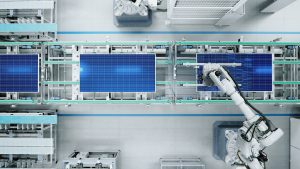
Physical AI teams treat networking determinism as a first-class engineering problem. Storage determinism rarely gets the same scrutiny, and that...
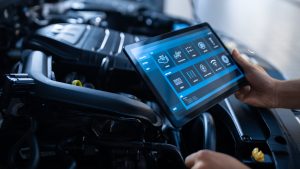
Both A/B partitioning and snapshot-based updating can roll back a failed OTA update. They reserve very different amounts of flash...
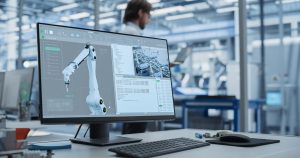
Industrial controllers may restart after a power interruption but return with missing, stale, or inconsistent data. This article explains the...
Automotive storage rarely fails outright; it drifts. Learn why vehicle storage performance degrades over time, which metrics matter, and how...
Suggested content for: