

Media and Entertainment
Cobalt Films keeps feature post-production moving with Tuxera Fusion SMB
Challenge
Post-production on a Cannes feature shot in raw DNG, with very long takes producing single folders of 30,000 to 60,000 frame files. Under the Samba service that ships with TrueNAS, listing one of those folders took around 30 seconds, every time.
Solution
Tuxera Fusion SMB deployed as a Docker container inside TrueNAS, replacing the native Samba service, serving Mac workstations over 10GbE with a 40GbE server link and SMB multichannel.
Result
Day-to-day frame folders list effectively instantly, re-conforms and new cuts no longer stall on directory access, and rollout after purchase took less than a week.
A feature that pushed the infrastructure
Cobalt Films is a small post house, working off shared storage across three grading suites. Its recent work includes A Man of his Time, directed by Emmanuel Marre, which premiered at the 2026 Festival de Cannes, drew wide acclaim from the French press, and received the Prix du scénario. It also stretched Cobalt’s infrastructure in unexpected ways. The filmmakers shot the film on a Digital Bolex camera that recorded raw DNG image sequences, and the director worked in very long takes that lasted several dozen minutes, allowing the actors to develop their characters. At 24 frames per second, those takes produced an enormous number of files. Single folders held 30,000 to 60,000 separate frame files, and every one of them had to be accessed, browsed, and re-conformed across Cobalt’s storage servers at each stage of the pipeline. A typical project at the studio looks much the same: quality-checking a feature Digital Cinema Distribution Master (DCDM), terabytes of data, with folders of 100,000 frames or more in a single directory.
What makes large frame sequences hard on shared storage
Frame-by-frame recording of this kind is common in high-end film production, and it is exactly where shared storage tends to struggle. Browsing and scrubbing through large DNG sequences over SMB has long been a bottleneck. The file count alone can overwhelm a standard SMB mount, to the point where listing the contents of a single folder takes half a minute before anyone can open anything. For a studio working to festival deadlines, that latency compounds across every select, every comparison, and every re-conform, and at Cobalt it came on top of multichannel behavior that left the 10Gb network mostly unused.
Why Cobalt chose Fusion SMB
The studio came across Tuxera through internet research, while trying to understand why Samba was so slow on its large frame folders. Tuxera product pages and TrueNAS community threads came up, and the rest was reading. The evaluation ran for one to two months.
Paul Millot, co-owner and colorist, Cobalt Films: “There is no other solution on the market which is anywhere close to Tuxera Fusion. We looked around, but on Linux everything else is Samba with extra steps. People who worked on SMB 3 built Fusion itself, and it showed from the first test.”
Rollout after purchase took less than a week and amounted to disabling Samba and starting Fusion SMB in its place. Cobalt singles out the support it received during the evaluation, with quick and precise answers on configuration and deployment throughout, as part of what made the decision easier.
How the workflow changed
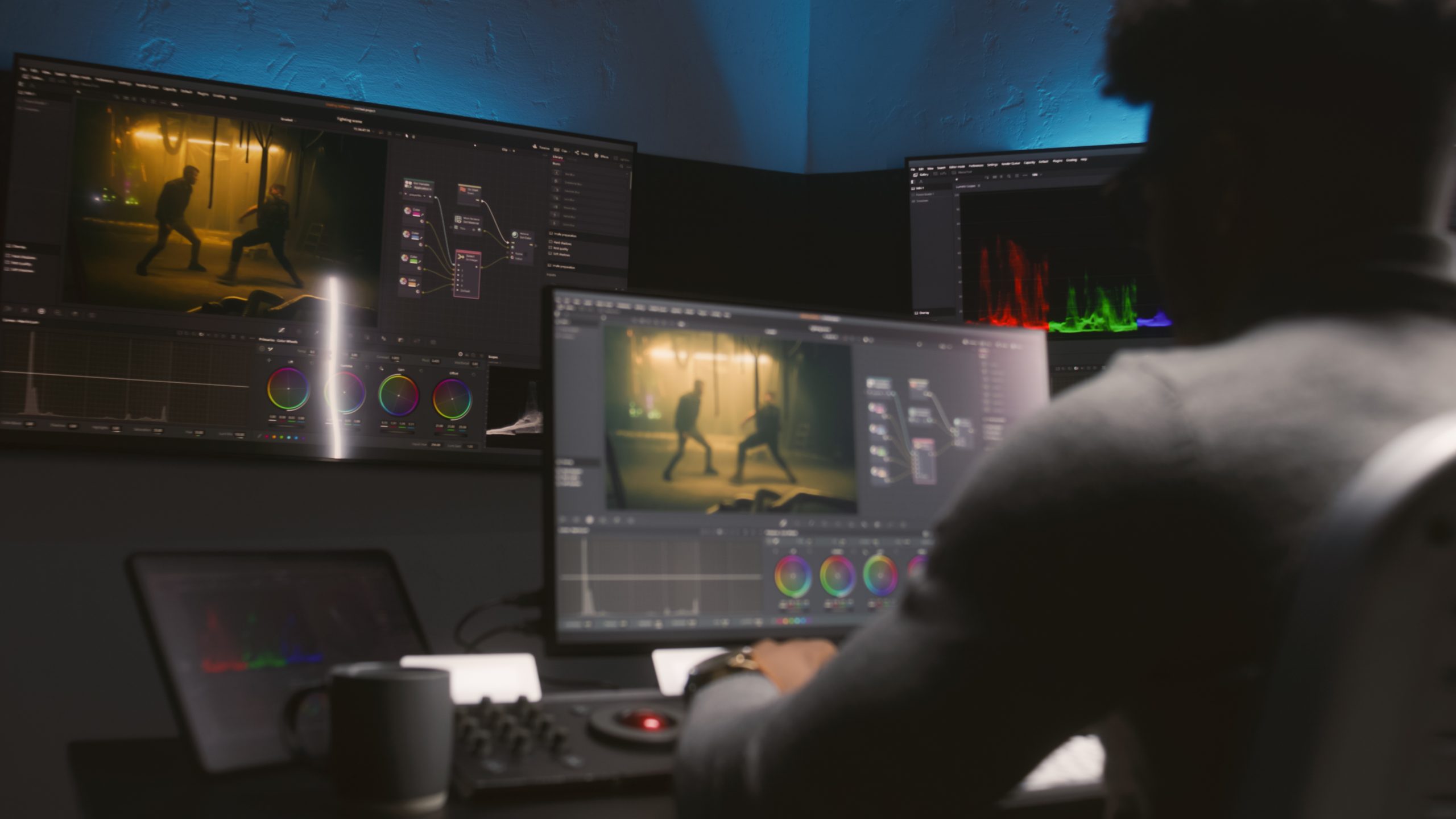
With Tuxera Fusion SMB in place, the editors and colorists could navigate these sequences fluently, pull selects, and compare versions without the usual latency or timeouts. The difference was clearest during re-conforms and when generating new cuts of the film. Fast access to the frame sequences, free of the dropouts and timeouts the team had come to expect, let them iterate quickly, turning what had been hours of waiting into a workflow that felt close to real time.
Paul Millot: “With Fusion SMB, a folder of 100,000 frames that took forever to open, if it opened at all, now lists in a couple of seconds. It is the first time we do not have to think about the storage before the work gets done.”
The same workload across the slate
Large frame sequences are not unique to this one film. The same pattern shows up across Cobalt’s work, and the studio names earlier productions it handled under the old setup:
- Yesterday the Eye Didn’t Sleep, Rakan Mayasi (also premiered at Cannes 2026)
- Ghost Trail, Jonathan Millet (Cannes 2024)
- Maldoror, Fabrice du Welz (Venice Film Festival 2024)
- The Passion According to Beatrice, Fabrice du Welz (Locarno 2024)
- My Life as a Courgette, a stop-motion animated feature, Claude Barras (Césars, Academy Awards, and Golden Globes, 2017)
Any of these would have run through the same directories, the same re-conforms, and the same multi-seat access to shared storage.