


Industrial embedded storage validation: tests that reduce downtime risk
Industrial embedded storage validation should prove more than basic functionality. This guide explains how to test power-loss recovery, data integrity,...
We are here to help
Have a question or need guidance? Whether you’re searching for resources or want to connect with an expert, we’ve got you covered. Use the search bar on the right to find what you need.

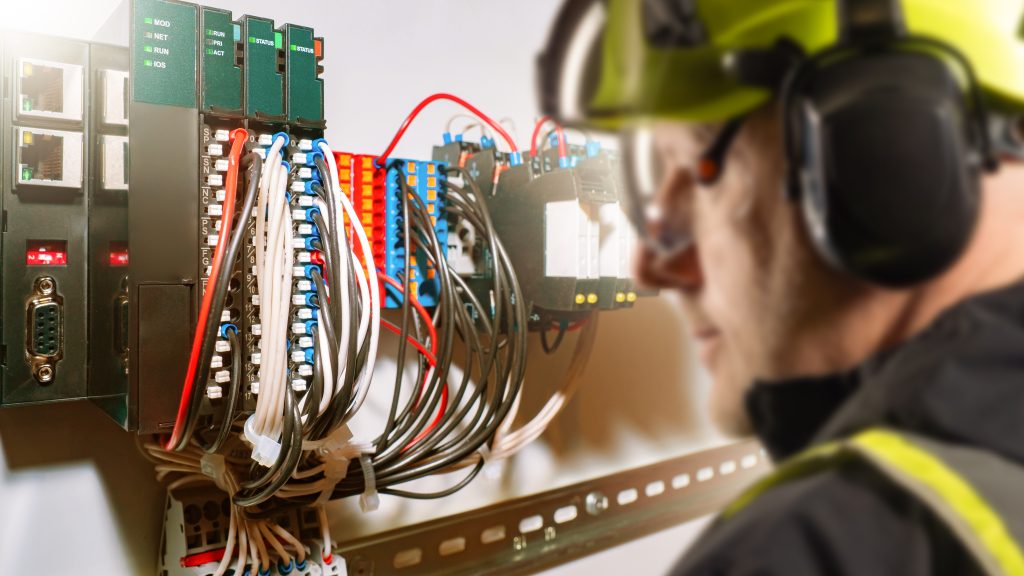
Industrial teams that maintain their own storage stack also inherit file system defects, flash-media changes, RTOS ports, regression testing, and field support. This article explains when commercial embedded storage software can reduce that maintenance burden and where system ownership still remains.
An industrial product can ship with a storage stack that works well on day one and still become expensive to maintain years later.
The product may need to adopt a new real-time operating system, and the file system has to be ported and revalidated with it. A processor or board support package may change. The selected flash device can reach end of life. Firmware updates may increase logging and write volume. A field issue can expose recovery behavior that the original development tests never exercised.
Packaging machine builder IMA saw what that costs on its VxWorks-based prototype machines. On some of them, unexpected power loss corrupted data on the compact flash media. In nearly 10 percent of cases the entire file system was corrupted, leaving the machine inoperable and sitting offline until a replacement card arrived.
When the storage layer is developed and maintained internally, each of those events becomes another software-development responsibility for the product team. Commercial embedded storage software can reduce part of that maintenance load, but only when the team is clear about which responsibilities it is transferring and which remain at system level.
This article focuses on industrial embedded systems and the maintenance decision. It is not a general guide to types of embedded software, and it does not assume that commercial software is automatically the right choice.
The storage stack sits between application behavior and physical media. Depending on the architecture, that path can include the application, database, file system, operating system or RTOS, flash-management software, device drivers, storage controller firmware, and the underlying flash memory or other storage device.
A change at one layer can alter assumptions at another. That is why embedded storage maintenance often grows into integration, validation, and lifecycle work rather than staying contained inside one software component.
A file system or flash layer that was integrated against one RTOS may depend on synchronization primitives, memory allocation behavior, timing, interrupt context, compiler assumptions, or driver interfaces that change in a later platform.
The same issue can appear when an industrial product moves between a real-time operating system, embedded Linux, bare metal, or a different embedded operating system. Even if the application API remains familiar, the underlying integration and verification work may not be reusable without review.
A processor migration can change cache behavior, DMA handling, alignment constraints, bus timing, or interrupt behavior. A new board support package can modify how the storage interface is initialized or synchronized. Device-driver changes can affect queueing, error propagation, and timeout behavior.
These are not necessarily storage-software defects. They are integration changes that can alter the way the complete software stack behaves on the new hardware.
Industrial products can have longer support lives than the storage devices inside them. When a NAND, NOR, eMMC, SD, or other component is replaced, nominal interface compatibility does not prove equivalent timing, endurance, caching, error-correction, or power-loss behavior.
If the internal storage software contains device-specific assumptions, the product team has to identify and update them. If the architecture uses raw flash, responsibilities such as wear leveling, bad-block handling, ECC policy, and mapping may sit directly in the software stack.
Storage requirements are not frozen when the product first ships. Later firmware may add diagnostics, telemetry, event history, local analytics, software-update staging, or more persistent state.
Those changes can increase write amplification, storage utilization, concurrency, and recovery work. A design that had comfortable timing and endurance margins on the original firmware can behave differently after several product releases.
Few industrial teams write a file system from scratch. A more common path starts with open source, such as LittleFS on a microcontroller, YAFFS on raw NAND, or UBIFS on embedded Linux. The team then adapts to its own flash part and RTOS.
That is a sensible starting point, and many products ship on it. The maintenance question appears later. Each fix for a power-loss case or a new flash part moves the code further from upstream. After a few product generations, the team owns a fork that nobody outside the company tests on its hardware, and merging changes becomes a project of its own. At that point the open source stack carries the same maintenance profile as an internal implementation, plus whatever license obligations came with it.
The strongest case for commercial embedded storage software is not that it makes maintenance disappear. It is that specialist work and responsibilities are carried out by a supplier whose product and engineering processes are built around those activities.
Instead of owning every file system defect, portability change, and media-specific corner case internally, the device maker can rely on a maintained component with defined releases, documentation, and technical support.
That can be particularly useful when storage software is infrastructure rather than a feature that differentiates the industrial product in the market.
A commercial component with established ports can reduce repeated development when products share a storage architecture across multiple embedded processors or real-time operating systems. The benefit depends on documented support for the actual target, compiler, RTOS, and storage interface rather than a broad “works everywhere” claim.
Storage failures can be difficult to localize because the visible symptom may appear in the application while the trigger sits lower in the persistence path. Access to engineers who specialize in file systems and flash management can shorten diagnosis when teams need to distinguish application behavior, file system recovery, device-driver problems, flash aging, or media-management issues.
Where an industrial design uses raw NAND or NOR, a maintained flash-management layer can isolate the application and file system from some media-specific behavior. That does not make a replacement part automatically equivalent, but it can reduce how much device-specific logic the product team has to maintain itself.
A supplier only reduces maintenance if its own maintenance is predictable. Before committing, teams should find out how long each release is supported and how defect fixes reach versions already in the field. The notice period before a product reaches end of general support matters too. Industrial products with long service lives need those answers in writing, because the storage component has to stay supported for as long as the device does.
The device manufacturer still owns the product. Commercial software does not remove the need to define requirements, integrate the component correctly, configure it for the target hardware, test it under representative workloads, and validate the complete system.
A supplier can maintain its component. It cannot know every timing deadline, power architecture, application transaction, safety requirement, production workload, or field environment unless those constraints are brought into the integration and validation process.
Buying a maintained component reduces the need for specialist storage work. It does not transfer responsibility for the complete industrial system.
A small internal implementation can remain sensible when the requirement is narrow, hardware is stable, storage behavior is simple, the team has the necessary expertise, and the software is unlikely to be reused across many products or operating-system variants.
An organization may also prefer internal ownership when the storage layer contains proprietary behavior that is central to the product or when procurement and dependency constraints outweigh the support benefits of a commercial component.
The decision becomes weaker when the internal code, or an internal fork of open source, has to support several hardware families, multiple RTOS environments, frequent storage substitutions, long field lifecycles, or repeated specialist debugging without a dedicated storage team.
“Commercial embedded storage software” is not one product category. The appropriate component depends on where the maintenance burden sits in the system.
For resource-constrained systems that need a maintained embedded file system, Tuxera EdgeFS is one option. Evaluate it against your memory footprint, RTOS integration, recovery behavior, and storage media. For more complex or heavier transactional workloads, Tuxera NitroFS represents a different file system architecture, designed to be power fail-safe. Industrial machine builder IMA, for example, moved to NitroFS after unexpected power loss corrupted file systems on its VxWorks-based packaging machines. In IMA’s own testing of 5,760 power-fail cycles, NitroFS recorded no corruptions, compared with more than 3,000 errors from the previous file system. Read the IMA story.
Where the design uses raw NAND or NOR and the maintenance sits in flash translation and media management, Tuxera FlashFX Tera is an example of commercial flash-management software. The right layer depends on whether the device already uses managed block storage or requires software to handle raw-flash behavior.
The lifecycle questions above apply to Tuxera as much as to any supplier. When a Tuxera product reaches end of general support, the Tuxera extended lifetime support program gives access to vulnerability and critical fixes after a product reaches end of life, supporting customers with exceptionally long lifecycles.
Teams can make the decision more concrete by tracking the engineering work that storage consumes across releases. Useful measures include time spent on storage-related defect diagnosis, porting work after RTOS or BSP changes, regression-test effort, media qualification, field recovery analysis, and support for component substitutions.
Those measures help separate strategic product work from infrastructure maintenance. If embedded engineers are repeatedly pulled away from the device’s target function to maintain storage code, the opportunity cost is part of the architecture decision even when the internal code has no license fee.
The goal is not to eliminate storage engineering. Industrial systems still need engineers who understand persistence, recovery, timing, flash behavior, and system validation.
The goal is to decide which storage responsibilities the product team needs to own directly and which are better maintained as supported infrastructure. When commercial software reduces repeated porting, media-specific work, defect investigation, and lifecycle support, the team can spend more of its engineering capacity on the functions that distinguish the device.
For teams evaluating industrial embedded storage solutions, that decision should remain architecture-led: identify the maintenance burden, locate it in the software stack, define the target platforms and lifecycle, and then compare commercial and internal options, including an open source fork, against those requirements.
RELATED ARTICLES
Industrial embedded storage validation should prove more than basic functionality. This guide explains how to test power-loss recovery, data integrity,...

An industrial embedded file system must provide more than basic file access. This guide explains how to define measurable requirements...
Industrial controllers may restart after a power interruption but return with missing, stale, or inconsistent data. This article explains the...
Suggested content for: