


Data integrity risks in medical devices: Where storage failures start
Medical device data integrity can fail even when storage remains accessible and a file system mounts cleanly. This guide explains...
We are here to help
Have a question or need guidance? Whether you’re searching for resources or want to connect with an expert, we’ve got you covered. Use the search bar on the right to find what you need.

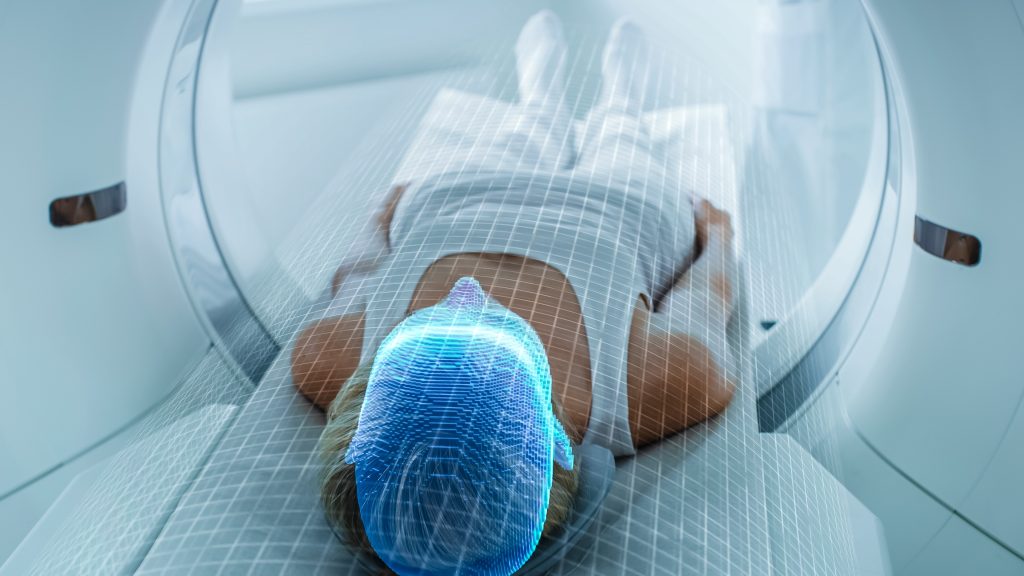
Embedded storage in a medical device rarely moves from healthy to fail in one obvious step. Long before a storage component becomes unreadable, its operating margin, latency, retention behavior, or ability to handle the same workload predictably can begin to change.
A medical device that initialized quickly when new may later take longer to restore a persistent state. Most reads and writes may continue completing normally while occasional operations become much slower. The storage subsystem may spend more time correcting errors, retrying reads, moving data, reclaiming blocks, or performing internal maintenance. Under demanding conditions, recovery may also take longer than it did earlier in the device’s life. These symptoms do not automatically mean the NAND itself is failing.
Medical device storage degradation is better understood as a gradual change in the behavior or available margin of the complete storage subsystem. Physical media aging can contribute, but so can workload, file system and database behavior, capacity utilization, environmental conditions, controller behavior, temperature, and assumptions made when the device was originally designed.
That distinction matters because medical device embedded storage does not need to fail completely before it affects device performance. Persistent state may participate in startup, configuration loading, diagnostic capture, logging, software updates, or recovery. If storage latency, endurance, or retention margin changes over time, those changes can begin consuming system margins that were comfortable when the product was new.
Where storage supports functions relevant to the device’s intended use, a loss of storage margin can also affect product integrity and, depending on the role of the affected function, patient safety. The significance has to be determined from the actual system requirements and risk analysis rather than from flash wear alone.
For medical devices where persistent state participates in a sensor-to-action path, lifecycle storage behavior also contributes to the trustworthiness of the Physical AI Data Layer. Storage reliability therefore needs to be demonstrated across the expected lifetime of the device, not inferred from fresh-media performance alone.
Storage degradation can describe several different changes. Treating all of them as one form of “flash wear” can make diagnosis and lifecycle planning less accurate.
At the physical level, NAND flash has finite operating margins. Program/erase cycling, retention time, temperature, disturb mechanisms, and other degradation processes can influence how reliably programmed states are distinguished over time. That does not mean the application immediately receives corrupted data, since error correction and flash-management mechanisms are intended to compensate for many changes occurring at the media level.
Endurance describes how much program/erase activity the media can tolerate while continuing to meet its specified reliability requirements. It is fundamentally a write-lifecycle consideration, and the amount of endurance consumed depends on the physical workload reaching the flash, not simply the number of bytes the application believes it has written.
Retention asks a different question: how long can programmed information remain reliably stored under defined conditions? Retention behavior can change with accumulated program/erase cycles, storage conditions, temperature, and the characteristics of the selected flash technology. A storage device may therefore have remaining write endurance while requiring closer attention to how long infrequently changed information must remain valid.
Storage behavior can also become less predictable. Depending on the implementation, additional corrected-error activity, read retries, garbage collection, refresh, relocation, or other internal maintenance may be required, so average throughput can remain acceptable while occasional operations take substantially longer.
For medical device manufacturers, the final concern is whether those underlying changes affect the complete product. A storage subsystem can still be technically operational while startup takes longer, configuration becomes slower to retrieve, recovery consumes more time, logging becomes less predictable, or software-update activity approaches a timing limit. Endurance, retention, integrity, and performance predictability are therefore related lifecycle concerns, but they should not be treated as interchangeable.
Medical device shelf life generally describes how long a device can remain stored before use while continuing to meet its applicable specifications. Depending on the product, shelf life testing may address packaging, sterility, batteries, material properties, adhesives, chemical stability, or other product characteristics that are broader than embedded storage.
Medical device storage introduces a different set of lifecycle questions. A device held under controlled storage conditions may primarily create a retention and environmental exposure requirement for its nonvolatile memory, but once the device enters service, it can additionally accumulate writes, erase cycles, database transactions, logs, software updates, and file system activity. The intended shelf life and the expected operating lifetime therefore need to be distinguished. Before use, the storage question may be whether required persistent information can remain valid across the storage period and expected environmental conditions. During service, the question becomes whether the storage subsystem can continue meeting endurance, integrity, performance, and recovery requirements after years of real workload.
These differences create genuine shelf life implications for products that spend a long time in storage before entering service, and retention assumptions made for fresh media should not automatically be extended to media later in life after substantial write activity. Other shelf-life considerations, such as packaging, sterility, material stability, or reprocessing requirements, may determine the lifecycle of particular medical devices, but they represent different degradation mechanisms from embedded storage. The remainder of this article focuses on degradation during the operational life of the storage subsystem.
NAND flash depends on physical mechanisms that change with use, time, and environmental conditions. The exact behavior varies with flash technology, controller implementation, flash-management software, workload, storage conditions, and temperature profile, so there is no single degradation curve that accurately describes every medical device. Several mechanisms are nevertheless important.
Flash cannot repeatedly update physical cells without erase activity. As program/erase cycles accumulate, the electrical characteristics of the cells gradually change and available endurance margin is consumed. One application write does not equal one physical program/erase cycle, since a relatively small software update can cause database activity, file system metadata changes, journaling, read-modify-write behavior, garbage collection, or data relocation farther down the stack. The storage lifetime of a medical device should therefore not be estimated from logical application writes alone.
Data retention describes how reliably programmed information remains stored over time. Accumulated program/erase cycling can reduce retention margin, while elevated temperatures can accelerate physical mechanisms that influence how long information can be preserved reliably. This is particularly relevant for long-lived information, since calibration, manufacturing, configuration, or other persistent state may remain unchanged for significant periods, and its storage requirements are different from a log or cache that is continuously rewritten. Retention requirements should therefore reflect how long the information needs to remain valid and the storage conditions it is expected to experience.
Program/erase endurance is not the only physical mechanism relevant to NAND. Repeated reads can influence neighboring cells through read-disturb effects, while programming activity can affect adjacent cells through program disturb. The practical significance depends on the flash technology, workload, controller, and mitigation mechanisms in use, which is another reason storage lifetime cannot be reduced to one write counter.
Physical degradation does not necessarily produce immediate application-visible errors. Depending on the architecture, the controller or flash-management layer may still return correct information through error correction, read retries, refresh, relocation, or bad-block management, so the application continues receiving valid data. What changes first can be the amount of work required to retrieve or preserve that data, which means potential degradation can initially appear as a latency or predictability problem rather than a data-corruption problem.
Storage health is often summarized with average throughput or average latency, but those metrics can hide lifecycle changes that matter at the system level. Most storage operations may remain close to their original latency while a small percentage require additional retries or internal maintenance, so the average can change very little even as the slowest operations become significantly more expensive.
Whether that matters depends on the device. Medical equipment that uses storage primarily for background logging may tolerate occasional latency spikes differently from a system where storage participates in startup, state restoration, update activation, or another bounded timing path. For general performance trending, p95 and p99 latency can help reveal changing behavior, and where storage sits inside a tightly bounded startup, recovery, watchdog, update, or other timing-sensitive process, p99.9 and worst-case observations may also deserve attention.
The device’s performance requirements should determine the metric. That approach avoids two common mistakes: assuming average throughput proves predictable storage performance, and assuming every medical device requires extreme-tail latency analysis.
Application write volume does not map directly to physical NAND write volume. A medical device may appear to update only a small amount of persistent information while the storage stack performs substantially more physical write activity underneath it.
Common contributors include:
The result is write amplification. The physical flash can therefore receive substantially more write activity than application-level statistics suggest.
Durability barriers also require careful interpretation. Synchronization operations do not create new user data by themselves, but frequent barriers can reduce opportunities for buffering, batching, and coalescing. That can change the downstream efficiency of the workload.
For lifecycle calculations, the important quantity is not only how much the application writes. It is the physical write burden that ultimately reaches the media.
Storage utilization is another important lifecycle variable. When substantial free space is available, the storage stack has more flexibility when placing new information and reclaiming blocks. As usable capacity declines, the same implementation may need to spend more time finding free space, consolidating partially used blocks, relocating valid data, and performing garbage collection. The result can be higher write amplification and more variable latency, although the degree depends on the storage architecture and workload.
There is no universal percentage at which storage becomes “too full.” The required headroom depends on the file system, database behavior, controller or flash-management layer, workload, storage technology, and performance requirements. Capacity should therefore be treated as a validation variable rather than managed according to a generic fullness rule.
Embedded storage operates inside a physical device, and its actual thermal environment can differ significantly from ambient room conditions. Medical equipment can experience different thermal profiles depending on enclosure design, processing load, battery use, ventilation, installation, and intended use. Portable systems may experience temperature fluctuations during transport and storage, enclosed electronics can expose storage components to temperatures higher than the surrounding room, and long-lived products may experience repeated thermal cycling. Temperature matters because it can affect retention and other flash-memory characteristics. Engineering teams should therefore consider the conditions actually experienced by the storage component rather than assume one room-temperature benchmark represents the complete product lifecycle.
The wider device may also encounter humidity, vibration, sterilization exposure, or reprocessing cycles. These environmental factors may play a significant role in the stability of particular products or materials, but they should not automatically be treated as flash-degradation mechanisms. The storage failure model should include an environmental condition only when the storage hardware, controller, interconnects, or surrounding electronics can realistically be affected by it, which keeps the analysis tied to the actual mechanism.
Physical NAND aging is rarely the first thing a software team observes. Instead, the symptoms typically appear several layers above the media. Startup may take longer because configuration, file system structures, database state, or other persistent information takes more time to retrieve. Typical reads may remain fast while occasional requests show increased tail latency. Recovery after an interruption may consume more time as storage activity becomes less predictable.
Write behavior can also change. A workload that was stable on fresh media may begin showing occasional latency spikes or errors later in life. Physical aging may contribute, but so can capacity pressure, controller behavior, database changes, file system activity, firmware, temperature, or a workload that has changed since the original design.
Retention deserves separate attention, because information that changes infrequently may become harder to preserve across its required retention period as the storage reaches later lifecycle conditions. The system may also become more sensitive to capacity pressure, since a workload that behaved predictably with substantial free space can experience additional data movement and latency variability as headroom declines.
None of these symptoms alone proves that NAND degradation is the root cause. The complete storage stack needs to be examined, particularly when the symptoms suggest a medical device data integrity problem, before system behavior is attributed to physical media aging.
A new device may present the easiest storage conditions it will experience during its entire lifetime. The media is fresh, storage is usually mostly empty, test workloads may be short, and environmental conditions may be tightly controlled. The product has not accumulated years of database updates, logging, software changes, capacity growth, or maintenance activity. Fresh-device testing remains necessary because it establishes a baseline, but it does not establish long-term stability.
Rigorous testing should represent the conditions expected during actual operation. That can include representative accumulated writes, realistic capacity utilization, sustained and mixed workloads, aged or appropriately conditioned media, relevant temperature conditions, retention periods, and power interruptions where recovery behavior matters.
The objective is not simply to write continuously until the storage fails. An arbitrary stress workload can produce degradation that bears little resemblance to the device’s intended use, so testing protocols should reproduce the mechanisms and conditions relevant to the expected lifetime of the product.
Broader shelf life testing in the medical device industry may use real-time aging, stability testing, stability studies, or validated accelerated methods depending on the property being evaluated. The same principle of mechanism relevance applies to embedded storage. Accelerated testing is useful only when the accelerated condition represents the degradation process being studied. Increasing write activity can accelerate endurance consumption, but an arbitrary write workload may not reproduce the application’s access pattern or the write amplification produced by the full software stack. Elevated temperatures can accelerate some retention-related mechanisms, but exposing storage to high temperatures does not automatically reproduce every effect associated with years of normal operation.
Embedded flash therefore needs a technology-appropriate lifecycle model. Acceleration should shorten the test, not change the failure mechanism being tested. Where applicable, real-time aging or representative field evidence can help confirm that an accelerated model reflects the behavior the product is expected to experience under normal conditions.
Medical device storage degradation should be evaluated through measurable system behavior rather than one generic health indicator. The first measurement is the logical write workload: how much data the application writes, how frequently it writes, and which workloads dominate. Continuous diagnostic logging can create a very different lifecycle profile from infrequent configuration updates. Where the architecture provides meaningful visibility, physical write behavior should also be estimated or observed so that write amplification is understood rather than assumed.
Latency measurements should extend beyond averages. Typical latency and p95 or p99 behavior can reveal broader trends, while p99.9 and worst-case observations may be appropriate when storage participates in a tightly bounded system path. Recovery should also be measured where the device has defined recovery requirements, because “eventually recovered” is not a useful pass condition when the application has an allowed recovery window or needs to restore a known-good state within a defined period. Capacity utilization should be included because behavior can change substantially as free-space headroom decreases.
Error and retry information may provide additional evidence. Some managed storage exposes corrected-error, retry, wear, or health information, while other implementations reveal very little, and vendor-specific health indicators should not be assumed to mean the same thing across devices. Thermal history also matters, so measurements should reflect the temperature experienced by the storage component itself under representative operation and storage conditions.
Finally, teams should identify the retention requirement for different categories of information. Temporary logs, frequently refreshed state, long-lived calibration data, and manufacturing information may need very different retention periods.
Medical device storage lifetime is influenced by system architecture as well as by the specifications of the flash itself. A useful starting point is a realistic writing budget. The model should estimate how much logical information the application will write across the expected lifetime and then account for amplification in the database, file system, and storage-management layers.
Critical state should also be separated from unnecessarily noisy workloads where the architecture allows, since high-volume logs do not necessarily need the same persistence strategy as calibration, configuration, recovery markers, or other important state. Batching small writes can improve efficiency in some systems, but durability requirements take priority. Information that needs immediate persistence should not be left vulnerable simply to reduce write activity.
Retention policies can also influence storage life. Keeping high-volume diagnostic information indefinitely can increase capacity pressure and physical write activity without equivalent operational value, so retention should follow actual engineering, servicing, quality assurance, post-market surveillance, and regulatory requirements. Free-space headroom should be validated on the real target system rather than chosen from a generic percentage. Where the file system itself contributes to recovery or timing variability, an embedded file system for predictable storage behavior may be appropriate, provided the choice is validated on the target workload and media.
Flash management must also suit the selected media. On raw flash, flash-management software for raw NAND and NOR may be needed to handle bad blocks, allocation, wear distribution, and other NAND-specific behavior. Managed flash implements many of these functions internally, but its behavior still needs to be evaluated under the intended workload. Wear leveling does not eliminate wear; it distributes it. Where supported, refresh or relocation strategies may also help maintain retention margin, though their usefulness depends on the selected storage architecture and the actual retention requirements of the data. The medical device embedded file system requirements should therefore be assessed alongside media-management and lifecycle requirements rather than treated as a separate decision.
A storage device does not need to stop responding before degradation matters. The meaningful threshold is whether changing storage behavior begins consuming margins elsewhere in the product. That can show up in several ways: latency approaching a startup or operational requirement, recovery taking longer than allowed, retention no longer supporting the required storage period, endurance being consumed faster than expected, or corrected-error and retry activity increasing. Capacity pressure may create unacceptable performance variability, persistent state may become harder to recover predictably, and preventive maintenance or field intervention may start happening more often.
Where storage participates in an essential device function, those changes can carry implications for device performance, product integrity, and potentially patient safety. That does not mean every storage-degradation event creates an immediate patient hazard. The consequence depends on the medical device, the affected function or data, and the manufacturer’s risk analysis.
So the useful question is not whether the NAND still works. It usually does. The question is whether the storage subsystem still meets the performance, integrity, retention, and recovery requirements defined for this stage of the device’s life. Once that answer becomes uncertain, the architecture warrants reassessment before outright media failure becomes the only available signal.
Storage degradation is one part of the broader medical device lifecycle. Medical device manufacturers operate within quality systems intended to demonstrate that products continue meeting applicable requirements and their intended use. Lifecycle activities may include quality assurance, stability studies, preventive maintenance, post-market surveillance, and investigation of potential degradation. Regulators evaluate the safety, quality, and performance of the finished device rather than one storage component in isolation.
Regulatory requirements therefore do not prescribe one universal NAND endurance test, file system, or method for evaluating medical device storage, and regulatory compliance cannot be established simply by selecting a particular flash technology or storage architecture. Instead, storage-lifecycle evidence can support the broader demonstration that a device continues meeting its defined design and performance requirements under relevant conditions.
Field and post-market evidence can also reveal behavior that was not apparent under controlled laboratory conditions. If recurring issues indicate that storage-related behavior is contributing to loss of required performance, those findings can inform risk management, testing, maintenance, and corrective actions. For storage engineering, the core question remains whether persistent information can be written, retained, retrieved, and recovered predictably across the intended life of the medical device.
Medical device storage degradation is rarely one sudden transition from healthy flash to failed flash. As embedded storage accumulates writes and experiences retention demands, temperature, capacity pressure, internal maintenance, and changing workloads, its available margin and timing behavior can evolve. Some of those changes begin at the physical NAND level, while others emerge from interactions between the application, database, file system, flash-management layer, controller, workload, and media. That is why storage degradation needs to be treated as a complete-system lifecycle problem.
Medical device shelf life, material stability, sterility, packaging, and other stability concerns remain important in the broader product lifecycle, but embedded storage introduces a distinct set of questions around endurance, retention, latency, write amplification, capacity, and recoverability. The key threshold is not whether the flash still responds. It is whether the complete storage subsystem continues meeting the integrity, device performance, retention, and recovery requirements defined for the medical device. For systems that depend on persistent state within a sensor-to-action path, lifecycle evidence also helps establish that the physical AI data layer remains trustworthy not only when the product is new, but throughout the environmental conditions, workload, and service life it was designed to withstand.
Read more about Tuxera storage software for medical devices and Tuxera FlashFX Tera, our flash management software.
RELATED ARTICLES

Medical device data integrity can fail even when storage remains accessible and a file system mounts cleanly. This guide explains...

Choosing a medical device embedded file system requires more than comparing APIs or benchmark speed. This checklist explains how to...
Commercial medical device storage software can reduce the burden of specialized storage engineering, field diagnostics, migration, validation preparation, and long-term...
Suggested content for: