

Medical
How Albert Einstein College of Medicine eliminated research data bottlenecks with Tuxera Fusion SMB
Challenge
Einstein’s Samba-based SMB layer was holding back an 18-petabyte IBM Storage Scale platform. Large directories crawled, and when a server failed, its users went down with it.
Solution
Tuxera Fusion SMB replaced Samba on the 8 IBM protocol nodes, clustered active-active across two data centers, with RDMA and Access-Based Enumeration reworked for Einstein.
Result
Transfers at near line speed, and failover nobody notices. One namespace across 18 petabytes for 1,100 students and 1,500 faculty.
Imaging research at petabyte scale
Albert Einstein College of Medicine is a research-intensive medical school in the Bronx, New York, with around 1,100 MD and PhD students and 1,500 active faculty members. A large share of its research runs on imaging. The school operates Optical Coherence Tomography (OCT), Diffuse Optical Tomography (DOT), super-resolution microscopy, Raman spectroscopy, photoacoustic imaging, endoscopy, and X-ray systems, all producing ultra-high-resolution images and video. Its genomics work adds terabyte-scale reference files that several researchers need to read at the same time.
The storage behind that work holds more than 6 billion files, roughly 18 petabytes in total, on an IBM Storage Scale platform with high-performance computing clusters and GPU resources for AI processing. Einstein’s partner Data In Science Technologies (DST) manages the platform. For clients connecting natively, it performed well. For everyone else, the way in was SMB.
Where the Samba-based SMB layer fell short
Most researchers reach the storage from laptops and desktops over SMB, and the school’s Samba-based SMB service had become the constraint on the whole system. “We had the very best technology in our data center,” says Shailesh Shenoy, Assistant Dean for Information Technology at Einstein. “But the onramp from the campus, from people’s laptops and desktops, was impaired.”
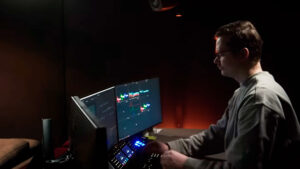
Shailesh Shenoy, in conversation with Tuxera at SC25, on why Einstein’s single namespace is its crown jewel and why the SMB gateway in front of it has to stay on at 3 in the morning.
The problems showed up in several places. Directories holding thousands of files took a long time to open, which slowed anyone browsing image collections or large datasets. Connections were sticky: a user attached to one server and stayed there, so load spread unevenly, and when that server had trouble the user lost access even though other servers were fine. In some cases data in flight was lost. Access-Based Enumeration (ABE), which Einstein uses so that researchers see only the directories they are permitted to see, carried a heavy overhead under Samba because of the recursive permission checks it requires. The research community is also predominantly Mac-based, where SMB performance was weakest. Concurrent access to terabyte-scale reference files strained the setup further.
What the bottleneck cost
The technical faults had a reputational effect. “What that does is give people the impression that the system is not state of the art,” Shenoy says, even though the back end was anything but. Some researchers responded by storing sensitive data on external drives or consumer cloud services to avoid the slow institutional path, which turned a performance problem into a security one.
Shenoy’s larger concern was timing. “When you work with a group of researchers… you never know when they’re going to be inspired, and if things aren’t working the moment they need it, it could be lost.”
Fusion SMB on the IBM protocol nodes
Einstein evaluated the options and selected Tuxera Fusion SMB. The clustering model was the main reason. Its licensed Microsoft SMB technology and its record with major storage vendors backed that up. The 8 IBM protocol nodes that had been running Samba now run Fusion SMB instead, 4 in each data center, in a single active-active cluster. The underlying storage platform did not change.
RDMA (Remote Direct Memory Access) support lets Fusion SMB move data without routing it through the server CPU, which is what brings transfers to near line speed. Tuxera’s engineers also reworked the ABE implementation for Einstein’s environment, so the permission filtering that had slowed directory listings under Samba no longer does.
What changed for researchers
Across the network as a whole, data transfer speeds rose by about 15%. On clients that can use RDMA, Fusion SMB delivers up to 85% of the file system’s own performance, close to line speed. Directories open quickly, including for Mac users, and the delays ABE used to add are gone.
Availability changed more. Any node in the cluster can fail, or 7 of the 8, and users keep working. Load balancing spreads connections across the nodes rather than pinning each user to one server. Maintenance on either data center happens without a user noticing.
Shailesh Shenoy, Assistant Dean for Information Technology: “With Tuxera Fusion’s clustering capabilities, we can perform scheduled maintenance or updates without any impact on our users. Even if we need to take a data center offline, nobody would notice the difference.”
The school now maintains a single namespace across the full 18 petabytes, serving researchers at their desks and the automated AI analysis pipelines that read the same data. With the institutional path fast again, the reason to copy sensitive research data onto external drives or consumer cloud accounts has gone. That data stays inside Einstein’s systems, and ABE gives each user a view of only the directories they are allowed to see.
“For us, this is about making infrastructure transparent to our researchers,” Shenoy says. “They shouldn’t have to think about it.”
What comes next
Einstein and Tuxera’s engineering team are continuing to work on network topology changes that bring the Fusion SMB front ends logically closer to campus users, to cut latency further.
“Moving to Tuxera was a no-brainer,” Shenoy says. “Having a solid technical solution to address our data sharing needs is essential. This is about enabling our researchers to succeed.”