


A/B slots or snapshots? Two ways to make an OTA update survive failure
Both A/B partitioning and snapshot-based updating can roll back a failed OTA update. They reserve very different amounts of flash...
We are here to help
Have a question or need guidance? Whether you’re searching for resources or want to connect with an expert, we’ve got you covered. Use the search bar on the right to find what you need.

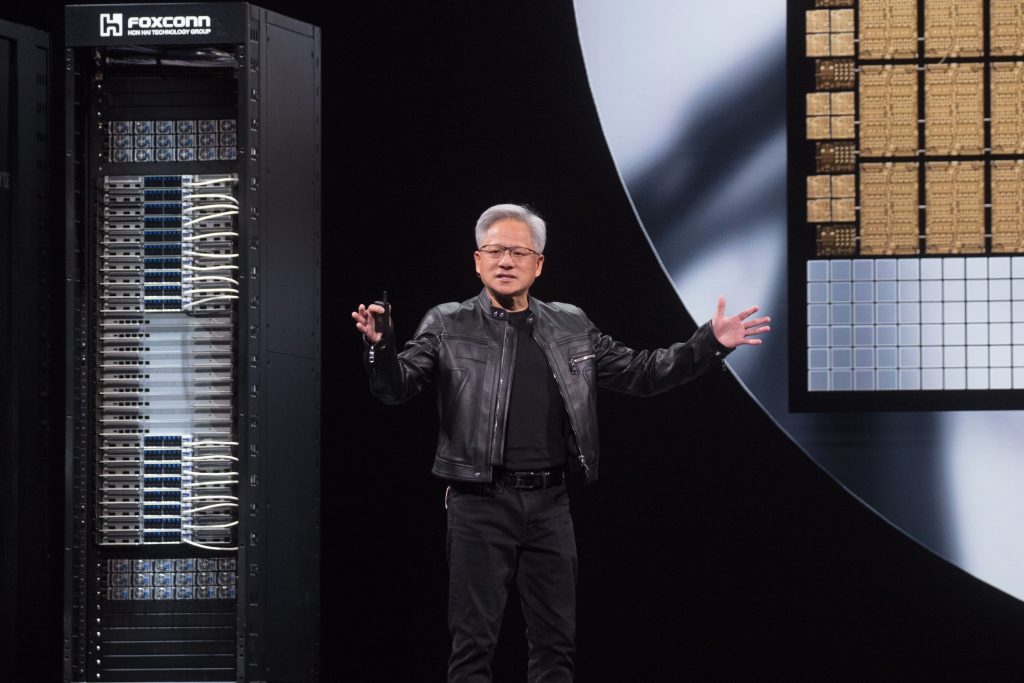
Robotics was a prominent theme at NVIDIA GTC Berlin, but one of the most relevant observations concerned infrastructure. Jensen Huang said that “long before the AI models emerge, the infrastructure has to exist.” He was talking about AI factories. It applies just as much inside the machine.
Huang described Hyperion, NVIDIA’s vehicle platform, as “the computer itself, the functional safety system, the active safety system, an operating system designed for physical AI safety,” and said robots need the same. His argument was about scale: one standard configuration, many customers, enough volume to turn the flywheel. He named Volkswagen’s commercial vehicles, JLR, Volvo and Mercedes-Benz as Hyperion partners, and the Agile ONE SN reference humanoid is due in early 2027 with compute and software already integrated.
NVIDIA Halos brings together compute, sensor connectivity and safety software for robotics. Launched in June at Automate in Chicago, it also featured in the GTC Berlin announcements. Its approach combines preassessed platform elements with inspection of how partners integrate them. The Halos AI Systems Inspection Lab assesses that integration and provides an inspection report and certificate that partners can use to support final assessment by an independent certification body. This reduces the need to reassess the platform foundations for each new machine.
Preassessed elements come with assumptions of use, and the integrator must show that those assumptions hold in the finished machine. The safety case must also account for the remaining components and their interactions. That includes the storage holding safety-related configuration, calibration and software: how is its integrity maintained, and what happens if it becomes unavailable or corrupted? Tuxera’s contribution is storage software and supporting verification evidence that customers can incorporate into their own system-level safety case.
A robot delivered in 2027 may run different models, record more sensor data and support new features by 2032. Updates can affect the configuration and assumptions supporting its safety case. Each change therefore needs an assessment of its safety impact, with verification and further assessment where required.
The practical failures are familiar. An interrupted update leaves the machine unable to boot. A power cut leaves configuration data inconsistent. A larger model no longer fits the space allocated years earlier. Across a fleet, these problems can mean downtime, service visits and additional engineering work.
Consider an update that changes a perception model and its calibration together. The machine needs a compatible combination after installation or recovery, and the operator needs a record of which versions are active. Diagnostic records explaining a failed update should survive a rollback. These are requirements to address when designing the update and storage architecture.
Tuxera is building SnapFS to address these storage challenges. It is currently in active development, with a technology preview and early access ahead of general availability.
SnapFS is designed to stage updates in a writable clone and activate the selected file system state atomically. A retained snapshot provides a previous file system state to return to if an update fails. The complete recovery path still depends on the boot process, application checks and compatibility with components outside that snapshot.
Snapshots share unchanged data, avoiding the need to reserve a complete second copy of the snapshotted content. Combined with an update mechanism that transfers and writes only changed data, this can reduce download size and flash writes compared with full-image replacement. A/B protection can still be appropriate for the boot chain and minimal recovery components, alongside snapshots for larger, frequently changing software and data.
SnapFS is designed to verify stored data using integrity hashes and report an error when verification fails, rather than silently returning corrupted data. The application must then follow a defined recovery or safe-state response. Detecting invalid data and responding appropriately to its loss are both necessary parts of the system design.
SnapFS also replaces rigid application partitions with subvolumes drawing from a shared storage pool. Quotas limit consumption, while reservations protect capacity for critical workloads. This gives applications more room to evolve without repartitioning, although total capacity and the headroom needed for updates and retained snapshots still require planning.
GTC Berlin reinforced the value of reusable platforms and safety evidence that integrators can build on. Storage and update design must support that approach throughout the machine’s working life, keeping relevant data consistent, recoverable and traceable as software changes.
This is the persistence side of Tuxera’s physical AI data layer, alongside the reliable movement of data between devices, edge systems and the cloud. Inside the machine, the practical question is whether the data supporting its behavior remains trustworthy through normal operation, updates and recovery.
RELATED ARTICLES
Both A/B partitioning and snapshot-based updating can roll back a failed OTA update. They reserve very different amounts of flash...
Physical AI will be decided by what a machine can show about the data behind its actions. Steffan Schumacher on...

Physical AI is industrializing. As AI moves into vehicles, robotics, and industrial systems, models can stay probabilistic, but the physical...
Suggested content for: