


ECU storage reliability testing: how to validate recovery, aging and update behavior
A fresh ECU can pass read, write, and reboot tests and still fail in the field. This guide covers what...
We are here to help
Have a question or need guidance? Whether you’re searching for resources or want to connect with an expert, we’ve got you covered. Use the search bar on the right to find what you need.

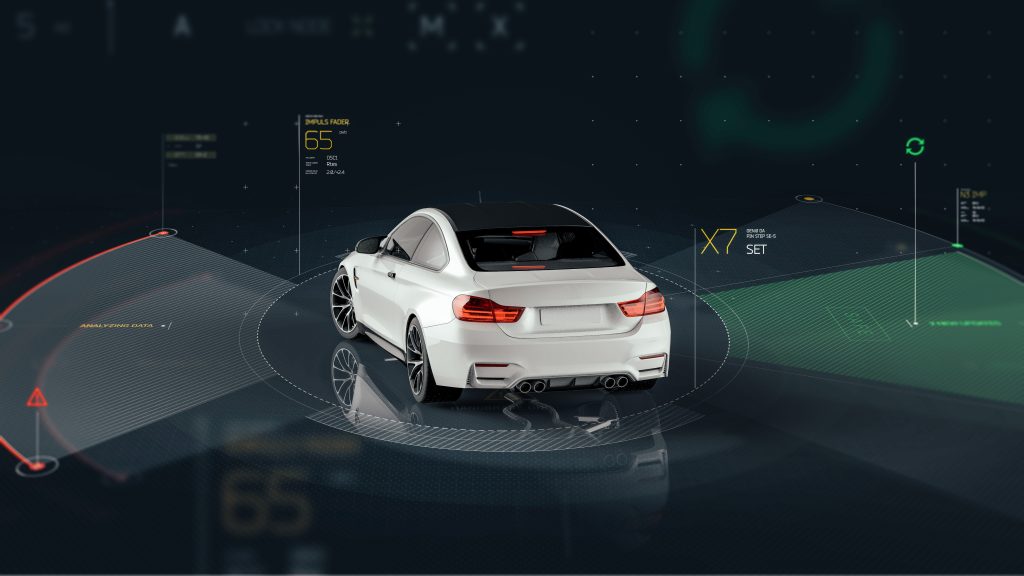
SDVs, or software-defined vehicles, are changing the way automotive systems are built and maintained. More capability is delivered through software. More data is created, stored, and moved. New features arrive through updates rather than hardware refresh cycles.
Zonal architecture is part of that shift. Instead of organizing vehicle electronics by individual control units scattered across the vehicle, zonal systems organize vehicle electronics by physical location. Each zone collects local devices such as sensors and actuators, then connects through a centralized communication gateway to a central compute unit or a central compute cluster.
This changes what storage has to do. In modern vehicles, storage is no longer only a local component. It becomes part of the system integration. Shared resources, shared timing windows, and shared recovery behavior mean storage performance and reliability can affect multiple vehicle functions at once.
This article explains zonal architecture storage requirements for automotive systems. It covers what changes in zonal automotive architectures, the requirements that matter most, what breaks when those requirements are missed, and how to evaluate options using evidence, not assumptions.
As vehicles become more software-defined and data-dependent, storage becomes part of the physical AI data layer: the sensor-to-action data path where determinism, integrity and recoverability need to hold under real-world stress over the full device lifetime.
A software-defined vehicle is a vehicle where functionality and improvement over time are delivered largely through software, including updates and software-defined functions. Hardware still matters, but software becomes the primary way behavior is expanded, maintained, and refined.
A zonal architecture groups vehicle functions into multiple functional zones based on physical zones within the vehicle. Zonal controllers manage local devices and traffic, then route data over an Automotive Ethernet backbone, increasingly with Time-Sensitive Networking (TSN) for deterministic timing. This replaces point-to-point harnessing and cuts wiring complexity and weight, which also improves packaging in space-constrained automotive environments.
Storage requirements in this article refer to the practical requirements that keep data and state reliable in automotive systems. This includes integrity, predictable recovery, consistent performance, lifecycle endurance, update safety, and integration readiness.
Zonal architecture promises significant advantages, but it also raises the bar on storage behavior.
First, resources become shared. Multiple services can depend on the same underlying storage and the same compute budget. A burst of write activity in one area can affect another service that needs low latency at the same time.
Second, timing windows become tighter. Startup sequences, health checks, and update windows often involve several services starting and validating together. Storage behavior during those windows must be predictable, not only acceptable on average.
Third, dependencies become broader. In older designs, a storage issue could be contained to a single control unit. In a zonal design, shared services and coordinated state can mean a storage problem propagates further. That propagation is what turns a storage issue into a system-level issue. In this context, storage requirements are not only about where data sits. They are about whether the data path can preserve state, recover cleanly, and remain predictable under field conditions.
Software-defined vehicles evolve continuously. That evolution creates storage pressure in predictable ways.
Write activity increases over time as logs, telemetry, event traces, and application data accumulate. Storage fills and its metadata grows along with it, so data management becomes more demanding the longer systems run and the more state they store.
Updates become routine, and whether frequent or controlled, they still touch sensitive state, concentrating write activity into narrow windows where predictable recovery and low latency matter most.
Workloads become mixed: advanced driver assistance systems, safety systems, and automotive applications run alongside non-critical functions, all competing for the same resources. When applications slow, the cause may not be compute alone: storage performance issues often surface as latency spikes, timeouts, or unpredictable stalls.
Hardware ages as well, and flash shows it most clearly: as cells wear, their behavior shifts over time, so wear leveling and background maintenance grow more expensive and write amplification rises. A system tuned for new flash can fall short years later if lifecycle pressure is not engineered in.
Performance degrades when the system is designed for early-life averages rather than long-life consistency. Storage is one shared resource among several, alongside compute scheduling and network determinism, but it is the one that quietly turns a local fault into a fleet-level one.
Integrity is the foundation. Automotive systems must remain consistent across interruptions. After a power loss or abrupt reset, filesystem and application state must recover to a known-good baseline without manual intervention. This is the storage side of freedom from interference between functions that share the platform, the property ISO 26262 expects you to preserve.
This requirement has practical implications. Small pieces of state control startup behavior, update selection and validation steps. If that state is inconsistent, the system can enter loops or fail to start critical functions reliably.
Good recovery behavior is repeatable: it works under the same failure modes that occur in the real world, without depending on manual intervention in the field or ad hoc procedures to restore a device.
In zonal systems, the requirement is rarely peak speed. The requirement is consistent performance under real workloads.
Average throughput can look acceptable while tail latency becomes the real problem. A few stalls can increase latency enough to cause timeouts or watchdog resets. Those stalls often come from background maintenance colliding with a timing window, not from a steady decline in throughput.
Performance requirements should be expressed in terms that reflect the system: what is the maximum acceptable worst-case latency during startup, during an update window, and when multiple applications are active?
This is the difference between faster storage and predictable storage. Zonal architecture storage requirements should prioritize predictable behavior.
Automotive systems have long service lives. Storage must behave predictably after years of writes, not only on day one.
Write amplification and background maintenance both matter here: as the workload shifts and the device ages, performance consistency can deteriorate even when the software version remains unchanged.
On the device, the dominant database write load to flash is typically SQLite. Its journaling, write-ahead logging, and fsync behavior drive random writes and write amplification, which is exactly what stresses the filesystem and the flash over the device lifetime.
Capacity planning needs to include write budgets, not only storage capacity, and account for future growth in logging and new features. The real question is not only how much data can be stored, but how the system behaves as it stores it over time.

Software-defined vehicles depend on updates. In zonal architectures, update failures can have a wider impact because more systems share resources and coordinated state.
Update safety requires controlled, atomic transitions and reliable rollback when validation fails. Staging must be safe, and interrupted updates should lead to predictable outcomes, not undefined states. This is where engineering meets regulation: UNECE R156 expects a managed, auditable software-update process, and storage behavior under an interrupted update is part of that evidence.
A simple rule helps decision-making: either the update completes and validates, or the system returns to a known-good version without looping. Anything in between becomes expensive operationally and difficult to validate at scale.
Security and compliance requirements vary by program, but storage always plays a clear role: protect critical state, protect sensitive data, and support traceability where required.
This is not a security deep dive, but the point is narrow and real: storage must protect critical state and support secure boot and traceability, in line with ISO/SAE 21434, rather than weakening them through inconsistent recovery or undefined state transitions.
Zonal architectures involve real constraints: space-constrained automotive environments and tight power and compute budgets are the norm. Storage must integrate cleanly into the actual platform and software stack, not only into a reference design.
That means supporting the hardware interfaces and integration patterns common in the automotive context and providing the evidence validation teams need: repeatable test results, clear integration guidance, and artifacts that explain behavior under stress.
On central compute, hypervisors and PCIe device sharing such as single root I/O virtualization (SR-IOV) let several workloads use one physical NVMe device. That makes per-workload QoS isolation and bounded latency a storage requirement, not just a hypervisor concern.
Whether or not a program uses SR-IOV, the storage requirement remains the same: predictable behavior under mixed workloads, clear isolation where needed, and validation evidence that matches the target environment.
Failure patterns are consistent across programs. One pattern is inconsistent recovery after power events: the system comes back, but its state is not clean, so recovery takes longer, startup windows stretch, and critical systems begin to fail in different places.
Another is performance inconsistency: background maintenance collides with a timing window, latency spikes appear, and applications slow down. The platform looks stable until the wrong stall happens at the wrong moment.
A third is update instability: markers and checkpoints become unreliable, and the system enters repeated loops, so what started as a single failure becomes a fleet-level issue because the system cannot trust its own state.
Finally, growth creates hidden load: logging increases and metadata becomes heavier, so performance requirements that were met early in life become harder to meet later unless lifecycle behavior is tested and managed.
Same decision, wider frame. Our webinar on balancing open source, commercial, and in-house software treats sourcing as a lifecycle decision rather than a license decision, using a 15-year storage example.
Zonal architecture storage requirements should be evaluated using evidence, not assumptions, and the evidence should be specific. The gap is rarely throughput; it is usually worst-case recovery time after power loss and tail latency during the startup window. Require proof in three areas.
First, examine recovery behavior under interruption. Find out what happens when power is cut during critical writes and during the startup window and require evidence that the system returns to a known-good state without manual intervention.
Interruption testing is where test design decides whether the results mean anything. Our white paper on power interruption testing covers how to build a failure sequence that produces usable evidence rather than a single pass or fail.
Second, test performance consistency under mixed workloads. Request results that include tail latency, not only throughput, and that show how the system behaves under concurrent read/write pressure, during startup and update windows, and when storage fills and background maintenance increases.
Third, check lifecycle behavior on aged devices. Look at what changes after long runtimes and sustained writes, and require aged-device validation or an aging plan that matches real-world workloads. If the system will run for years, the evidence should reflect years of pressure, not days of testing.
Make pass and fail criteria explicit: define acceptable recovery time, acceptable worst-case latency, and what failure looks like and how the system should respond. That is how validation becomes repeatable.
If the evaluation includes storage services outside the vehicle, such as cloud storage or a connected vehicle ecosystem, tests should reflect those conditions too. Integration environments can include multiple servers, storage tiers, or storage area networks during development, and those environments can change workload characteristics. Aligning performance metrics across infrastructure, application, and validation teams helps avoid false conclusions about the root cause of performance issues.
If the stack includes database workloads, test them explicitly at the layer where they run. On the device, that usually means SQLite; in the connected ecosystem and in integration and validation environments, server databases such as SQL Server run on backend infrastructure and storage tiers, including storage area networks. Each stresses random reads and metadata differently from synthetic tests, so test what your stack actually runs, not a generic proxy.
Zonal architectures and software-defined vehicles set a higher standard for storage behavior: shared resources must remain predictable under concurrency, updates must remain safe under interruption, and lifecycles must be validated rather than assumed. In this context, zonal architecture storage requirements are not only a checklist for components; they help prove whether the data path can preserve state, recover cleanly, and remain predictable under field conditions.
SDVs and zonal architectures change how automotive systems behave. They increase concurrency, increase coordination, and increase the consequences of inconsistent recovery and performance inconsistency. Zonal architecture storage requirements are requirements for predictable behavior across a shared system: integrity, predictable recovery, performance consistency, safe updates, and lifecycle stability.
Programs that avoid fleet-level issues tend to validate the hard cases early: they test interruptions, not only success paths; measure tail latency, not only averages; and validate aging behavior, not only fresh devices. That is what makes storage predictable in modern vehicles.
RELATED ARTICLES

A fresh ECU can pass read, write, and reboot tests and still fail in the field. This guide covers what...

OTA updates rewrite critical vehicle state under real-world stress. Learn the storage failure modes that brick units, and a power-cut...

Automotive storage rarely fails outright; it drifts. Learn why vehicle storage performance degrades over time, which metrics matter, and how...

Software-defined vehicle cybersecurity is only as strong as the data stored inside the vehicle. Why data at rest is becoming...
Suggested content for: