


Smart meter storage software checklist: Lifecycle, recovery, and endurance
Selecting smart meter storage software means understanding how the complete persistence stack behaves across the product lifecycle. This 12-point checklist...
We are here to help
Have a question or need guidance? Whether you’re searching for resources or want to connect with an expert, we’ve got you covered. Use the search bar on the right to find what you need.

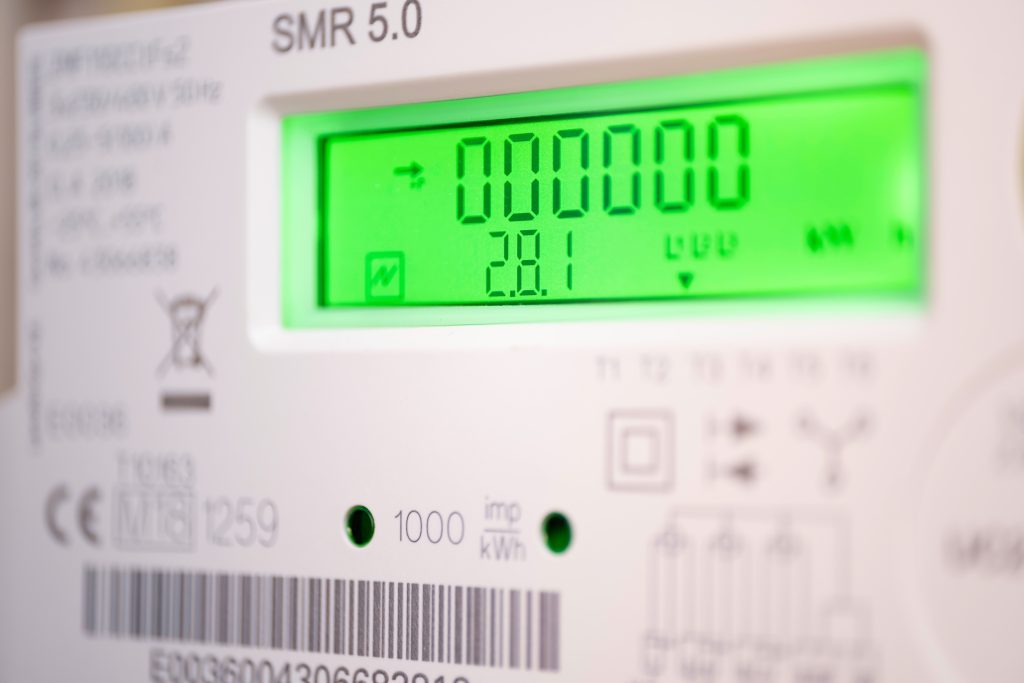
A smart meter can lose power, restart, reconnect to the network, and appear to be operating normally while its most recent data tells a different story. An interval reading may be missing. A cumulative register may return to an earlier value. An outage event may survive without all of its associated information, or the meter data may still exist locally even though the utility system has not received it. Smart meter data loss is therefore not simply a question of whether a device can reboot after an outage. The more useful engineering question is whether the meter can recover the correct measurement state, timestamps, configuration, and event information after power has been interrupted.
In smart energy infrastructure, measurement and device-state information needs to remain consistent and recoverable through power interruptions and long operating lifecycles. To understand where that reliability can break down, it helps to follow smart meter data from the moment it is measured to the point where it becomes durable and eventually reaches the utility network.
A successful reboot should not be the primary measure of smart meter storage reliability. Known-good data within the required recovery window is.
“Lost data” can describe several different failure conditions. Missing data is the most obvious: a recent interval reading, event record, configuration update, or other piece of smart meter data is no longer available where the system expects it. In some cases, the meter may still retain the record locally, but two-way communication has not recovered, the transmission queue has not cleared, or the upstream system has not yet reconciled what the device stored. Stale data is less obvious. The meter may recover an older but valid checkpoint, so nothing appears corrupted, but the recovered state no longer reflects the latest measurement or configuration. Inconsistent data occurs when related information no longer agrees. A reading may survive while its timestamp does not, a cumulative value may disagree with the latest interval records, or a configuration update may persist without the matching version marker.
Corrupted data occurs when stored records, metadata, or other structures can no longer be interpreted or validated correctly. Corrupted data can also refer to firmware corruption, where the firmware cannot recover to any good state after an unexpected power outage. These conditions have different causes, and treating every missing meter reading as storage corruption can send troubleshooting in the wrong direction.
Many smart meters record energy consumption data at regular intervals along with other information such as cumulative values, outage events, configuration state, and diagnostics. That information can support accurate billing, analysis of energy usage patterns, peak-demand planning, outage management, and other processes used by utility companies and grid operators. Repeated gaps in meter data, such as missing intervals, reduce visibility into energy consumption and can turn into billing or energy distribution problems. Meter data also carries operational context. A device that returns stale or incorrectly timestamped information creates a different problem from a meter that simply remains offline, so for engineering teams, data integrity needs to include both the measurement and the state required to interpret it correctly.
A useful way to investigate smart meter data loss is to stop treating “written” as a single event. A simplified persistence path runs from measured to buffered to committed to durable to transmitted, and each stage means something different.
At the measured stage, the metrology or application layer calculates a reading or updates device state, and the newest value may still exist only in processor registers or volatile memory. At the buffered stage, RAM or other volatile memory temporarily holds readings before they are written to nonvolatile storage. Buffering can reduce write frequency, power consumption, latency, and storage wear, but buffered data has not necessarily survived a sudden loss of power. At the committed stage, the application, filesystem, or embedded database considers an update logically complete. Depending on the architecture, that does not always mean the underlying storage has finished the work required to make the new state persistent. At the durable stage, the required information has reached nonvolatile storage in a form the system can recover after restart. This is the critical boundary during a power event. At the transmitted stage, the meter sends the stored data through its communication path so that an upstream system can receive and process it.
These states are not interchangeable. A meter can measure a value that never becomes durable. It can preserve a value locally but fail to transmit it. It can also communicate an outage event while another application update is still pending.
Most investigations can be organized around three broad layers.
The newest data may still be held in RAM, being accumulated into an interval, waiting for a scheduled commit, part of a set of related values being saved together, or waiting for an application checkpoint. If power disappears here, the persistence layer may never have received the newest value. That is not necessarily storage corruption.
Once the meter begins persisting information, power interruption can affect different layers depending on the design. A write may involve application state, filesystem metadata, an embedded database, flash-management software, or the underlying nonvolatile memory. If power is lost between related operations, the meter may recover an older valid state, an incomplete state transition, or structures that require recovery before normal operation resumes.
The meter itself may be healthy while the utility still sees a gap. The communication network, gateway, or data concentrator may still be recovering, an outbound queue may be waiting to transmit, or timestamp and sequence reconciliation may not yet have completed. The diagnostic question should therefore be what the meter retained locally and what the upstream system actually received.
A complete outage and a brownout create very different operating conditions. During an abrupt loss of power, available energy may collapse quickly, and the device faces an ungraceful shutdown with only the hold-up window its electrical design provides. During a brownout, voltage levels may fall gradually or repeatedly move above and below operating thresholds. The processor may continue executing while the margin available for reliable storage operations is already decreasing. Software may begin another process before the reset threshold is crossed. Voltage can recover, allow the system to start again, and fall a second time during recovery.
In water meters, which are mostly battery powered, brownouts are common and in practice part of normal operation. To reach a 10-year battery lifetime, a water meter typically takes 2 to 4 readings a day during different time windows and then goes into sleep mode.
Brownout detection and voltage supervision help prevent processors and memory devices from operating outside intended voltage ranges. They do not, however, guarantee that related application data will remain consistent. The software and persistence architecture still need a defined response to interrupted operations.
Some smart meters use stored backup energy to send an outage or last-gasp notification after mains power is lost. That function is useful, but communications success and local persistence are different things. A last-gasp message answers whether the meter had enough power and connectivity to report the outage. Persistence answers whether the device made the required meter data durable before power disappeared. A meter may preserve its latest local state but fail to send the notification, and another may successfully send the outage event while a recent measurement was still buffered. Receiving a last-gasp notification should therefore not be treated as evidence that every recent record had already been committed to persistent storage.
The engineering teams designing embedded devices often need to balance write frequency, endurance, power consumption, and performance. The key design decision is which data is critical. Billing-critical and operationally important meter data must be written to persistent storage in a way that survives a sudden power loss, while non-critical data can remain in volatile memory.
Smart meter state is rarely one isolated value. Saving a single new piece of information often means writing several related values together, such as an interval reading and timestamp, a cumulative register and sequence number, a configuration value and version marker, or an outage event and associated record. If the meter persists related values independently, power failure can leave a mixture of old and new state.
Where the meter uses a filesystem or embedded database, power interruption introduces another persistence layer. Depending on the implementation, an outage can interrupt metadata updates, transactions, checkpoints, journal activity, or storage synchronization. When the application reports that a write is complete, the data may still be held in a cache or buffer further down the stack. A reported save does not guarantee the data has physically reached nonvolatile storage.
Where the meter uses flash memory, the application may not see all storage operations beneath it. Depending on the media and software architecture, the storage layer may perform block erasure, wear leveling, bad-block management, mapping updates, garbage collection, error correction, or internal data movement. An interruption during these operations creates a different recovery problem from an interrupted application write.
Recovery itself is also a failure window. The first outage may leave the meter in a recoverable state, but if another power event occurs while storage is being mounted, transactions replayed, state rebuilt, or records reconciled, the system has to recover from a second interruption.
Smart meter data integrity is not limited to the measured amount of electricity. A usable record may also depend on its timestamp, interval number, sequence counter, cumulative register, tariff period, configuration version, or outage-event identity. A consumption value associated with the wrong time or sequence may still be unusable even if the numerical reading itself survived correctly. Meter-data integrity means preserving the value and the context required to interpret that value.
Long-lived embedded devices should not be qualified only with factory-new storage. Where the meter uses flash memory, behavior changes as the device accumulates writes. Each flash block can only be programmed and erased a limited number of times. In a new meter, every block is fresh and there is plenty of spare capacity. Over years of operation, worn blocks are retired, fewer spare blocks remain, and storage management has to work harder. Writes can take longer, leaving less margin when the supply voltage drops. This is why a meter that passes brownout testing when new can behave differently later in its life. Temperature, storage utilization, error-correction activity, media condition, and background storage-management operations can also influence write and recovery behavior.
For this reason, meters should be tested not only with new flash memory, but also under the conditions they will face in the field, such as aged storage, high storage utilization, and a range of temperatures. Power-fail testing should represent the whole expected lifecycle, not only a new device on an engineering bench. The related article on utility field device storage failures covers the long-term mechanisms in more depth, and the validation plan for utility devices describes how to build that lifecycle evidence over 10 to 20 years.
Our webinar Why smart meters fail early, and what we can do about it walks through both failure mechanisms, unexpected power loss and flash wear-out, and includes a customer project where product lifetime rose from under 10 years to more than 25.
When meter data goes missing after a power event, the first step is to find out which layer failed. Diagnostics and data logs from meters in the field show how each device behaved through real power-fail scenarios, making it possible to compare the data stored inside the meter with what the upstream system actually received. These findings also help engineering teams choose the right storage architecture when designing the next meter platform or project. Useful evidence can include the latest durable interval record, cumulative meter values, local event logs, sequence counters, transmission queues, last-gasp and restoration events, communication retries, head-end receipt, and timestamp synchronization state.
If both the local record and the information confirming it was committed are missing, the data most likely never reached nonvolatile storage before power was lost, and the storage path is the main suspect. The network is an additional factor to rule out. If the data is present in the meter’s nonvolatile storage but has not reached the utility system, it was stored correctly, but the communication network may have been unavailable when power returned, so the data was not shared upstream.
Randomly removing power from a development unit can expose obvious faults, but it is not enough to validate data integrity. A stronger test program injects power interruption during specific operations such as interval finalization, cumulative-register updates, event-log writes, timestamp or interval rollover, configuration changes, filesystem or database commits, flash erase or program activity, transmission-queue updates, and startup or recovery. The electrical conditions should vary as well: abrupt power cuts, gradual voltage decline, short brownouts, repeated brownouts, rapid power cycling, and another interruption while recovery is already in progress.
Testing should use production-representative firmware and workloads. Depending on the expected environment, that may include active communication, representative temperature conditions, and aged storage. Most importantly, define the right pass condition. “The meter rebooted successfully” is not enough. A stronger requirement is that the meter reaches a known-good state within the required recovery window, critical records remain mutually consistent, no critical data is lost, and normal operation resumes without unexpected repair.
Start by defining the durability requirement. Engineering teams should classify which data is critical and must survive a sudden power loss, and which data is non-critical and can remain in volatile memory, since billing-critical state, configuration, recovery metadata, diagnostic logs, and regenerable information do not necessarily need identical persistence policies. Then keep critical state consistent. Where appropriate, transactional updates, atomic replacement, checksums, version markers, and known-good fallback states can help prevent the system from recovering incompatible generations of related data.
Design for the real brownout profile. The power architecture should account for voltage monitoring, reset thresholds, power-fail detection, available hold-up time, and the actual requirements of the selected nonvolatile storage. Finally, validate the full persistence chain. A fail-safe filesystem can reduce filesystem-level risk, flash-management software can address behavior at the media layer, and voltage supervision can reduce operation in unsafe electrical conditions, but no individual component guarantees complete meter recovery by itself. The application, persistence software, storage media, and power architecture need to be validated together.
A deeper architecture review may be warranted when field failures repeatedly follow outages or brownouts, critical meter state cannot be updated consistently, critical smart meter data cannot be reliably protected against power loss, recovery time varies significantly between events, aged devices behave differently from new units, storage requires repair after expected power events, actual write workload exceeds endurance assumptions, or another interruption during recovery can leave state ambiguous. At that point, the problem may require more than adjusting application timing. The smart meter storage software checklist sets out the evaluation criteria in detail.
Which part of the stack needs attention depends on the meter. Most meters are MCU-class designs where the file system has to survive power loss within a small RAM and code budget, which is the problem Tuxera EdgeFS is built for; Tuxera NitroFS does the same job for larger data workloads, and Tuxera FlashFX Tera manages raw NAND or NOR beneath the file system. The right combination depends on the meter’s hardware, software, storage media, recovery requirements, and which data is classified as critical.
When a smart meter loses power, the outage itself is only the trigger. The actual failure may occur because a measurement was still volatile, buffered data was not completely written to storage, related values were updated separately, storage activity was interrupted, recovery was interrupted again, or the data remained inside the meter while the communication network was still coming back online.
The meaningful goal is for the electricity meter to recover a trustworthy state, retain all critical data, preserve the relationship between readings and their context, and make retained information available for upstream reconciliation. For smart energy systems expected to operate through repeated power events and long deployment lifecycles, that is the difference between a meter that merely turns back on and one whose data can still be trusted.
RELATED ARTICLES
Selecting smart meter storage software means understanding how the complete persistence stack behaves across the product lifecycle. This 12-point checklist...
Utility field devices stay deployed for a decade or more, so engineering teams cannot wait to find out whether persistent...

AMI keeps utility operations remote only while the endpoint stays recoverable and manageable. This article follows five persistence failure paths...

A utility field device can pass qualification and still develop storage problems years later. This article explains the mechanisms behind...
Suggested content for: