


Smart meter data loss after power events and brownouts
A smart meter can reboot, reconnect, and appear healthy while its most recent data is missing, stale, or inconsistent. This...
We are here to help
Have a question or need guidance? Whether you’re searching for resources or want to connect with an expert, we’ve got you covered. Use the search bar on the right to find what you need.

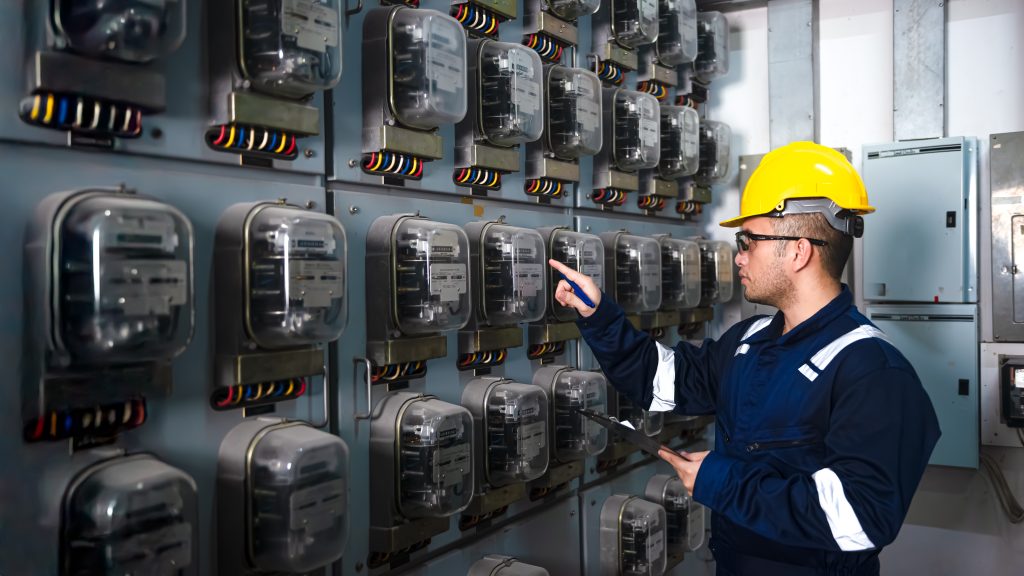
Advanced metering infrastructure moves many utility operations from manual field activity into connected systems that can be remotely monitored. Depending on the deployment, smart meters can support automated data collection, remote status checks, configuration changes, firmware maintenance, and service connect or disconnect functions. Those capabilities improve operational efficiency, but only while the endpoint remains usable enough for remote systems to communicate with and manage it. That is where embedded storage software for AMI becomes relevant.
Embedded storage does not eliminate truck rolls or determine AMI reliability by itself. The local persistence layer can, however, influence whether a smart meter recovers after a power event, retains critical state, preserves useful diagnostics, and completes or recovers from firmware updates. If required device-side state cannot recover correctly, an otherwise remote issue may escalate into a field visit. For the device-side storage technologies involved, see Tuxera smart energy solutions.
This article covers the endpoint side of the AMI architecture only. Networks, head-end systems, and meter data management are referenced only to separate local persistence failures from upstream problems.
A truck roll is a physical visit by utility personnel or a service team to inspect, configure, repair, replace, reconnect, or otherwise work on a meter or related field equipment. AMI can reduce some visits because activities that once required site access may be performed remotely, including meter reading, status checks, diagnostics, configuration, firmware updates, and connect or disconnect functions where supported. That does not mean every truck roll is avoidable. Physical meter damage, wiring faults, failed communications hardware, installation issues, tampering that requires inspection, safety conditions, or hardware replacement can still require field service. The goal is to help prevent avoidable persistence-related endpoint problems from becoming field visits when the device could otherwise remain recoverable and remotely manageable.
AMI is broader than the smart meter itself. A deployment can include the endpoint, communication networks, a head-end system, meter data management, and upstream billing, cloud, analytics, or other utility applications. This article focuses on the endpoint side of that architecture. Depending on the meter design, local storage may hold operational configuration, meter data, failure events, diagnostic information, firmware state, update status, security-related configuration, or records waiting to be transmitted when communications become available again.
Not every AMI device stores the same information or uses the same storage architecture. Some systems rely heavily on MCU internal flash for firmware and critical logs, while others use NOR, NAND, managed flash, or another form of nonvolatile storage alongside internal flash where there are higher data storage needs. The key point is that remote AMI capabilities can depend on the endpoint recovering with enough trustworthy local state to resume its required functions.
A useful way to think about endpoint reliability is as a chain: persist, recover, reconnect, diagnose, update, and continue remote operation. Required data and state first need to persist according to the application’s durability requirements. After an interruption, the endpoint must recover to a known-good usable state, reconnect where communications are available, and retain enough evidence for diagnosis or remote remediation where supported. Embedded storage affects only part of this chain, but that part can be significant. If the device cannot recover the state required for normal operation, the wider AMI system has fewer options for keeping the issue remote.
Power interruptions are expected operating conditions for many utility devices. If a power outage occurs during an active write, metadata update, filesystem operation, or other storage activity, the endpoint needs a defined recovery path. A successful reboot alone is not enough. The system may also need to restore consistent metadata, recover application state, validate persistent records, and return within the required recovery window. Problems become operationally important if the device remains stuck in recovery, repeatedly restarts, or returns with inconsistent state, and the risk becomes harder to manage if another power interruption occurs while recovery is already in progress. AMI endpoint testing should therefore establish whether the device can recover to the required operable state after interrupted storage activity and whether remote management can resume within the expected window. The deeper outage and brownout mechanics are covered in smart meter data loss after power events and brownouts.
A remote AMI endpoint depends on more than meter readings. Depending on the implementation, it may rely on persistent configuration, communication settings, application state, operating counters, update status, or security-related parameters. If required state becomes inconsistent or unreadable, the device may still power on but no longer behave as expected, which complicates remote troubleshooting. A communication problem, for example, may initially resemble a network failure while the endpoint is actually unable to recover the local configuration it needs for normal operation.
This does not mean a nonresponsive meter should automatically be diagnosed as a storage failure. Communication networks, radio hardware, power, firmware, and upstream infrastructure can produce similar symptoms. The engineering question is which persistent state the endpoint requires to restore normal remote operation and how that state is recovered under the defined failure model.
Remote firmware maintenance is a clear example of how embedded storage can affect operational efficiency. The update process depends on the endpoint retaining enough valid state to determine what has been downloaded, activated, or left incomplete after an interruption. Depending on the architecture, storage may be involved in retaining firmware images, update metadata, version state, activation status, or recovery information. Not every endpoint uses dual images, A/B partitions, or rollback copies, so the required behavior needs to be defined for the actual design.
If power is lost during an update, can the endpoint remain in or return to an approved operable state? If activation fails, is there a supported recovery path, and can the device reconnect for remote diagnosis or retry? The operational value of OTA depends in part on interruption and recovery handling. Across a large AMI fleet, update failures that require physical recovery can turn a process intended to remain remote into additional field activity, so firmware recovery is an important consideration when evaluating embedded storage software for AMI.
Storage reliability and communication reliability solve different problems. A meter can be functioning correctly while temporarily unable to transmit data because of a network interruption, gateway problem, or upstream infrastructure event. Where the AMI architecture supports delayed transmission, local storage may need to retain required meter records, events, operational state, or other data until connectivity returns. The storage layer does not restore the communication network. Its role is to support the endpoint’s defined local buffering and persistence requirements while communications are unavailable.
Engineering teams should define how much data must be retained, how long the endpoint may operate without connectivity, which information is critical, and what happens as available storage becomes constrained. Reliable local persistence can preserve the records and state required for transmission or reconciliation after the communication path becomes available again, rather than allowing a temporary network problem to create a separate persistence problem.
An AMI endpoint that works correctly when new may behave differently after years of operation. Repeated writes, write amplification, temperature exposure, reduced available storage, firmware changes, and the characteristics of the underlying media can all affect long-term behavior. The operational concern is not storage aging by itself. It is whether late-life storage behavior begins to affect recoverability, availability, diagnostics, or remote manageability. Increasing recovery time, recurring storage errors, reduced capacity, or changing media-health indicators can reduce the margin the endpoint had when it was first deployed. For deeper software-selection and lifecycle criteria, see the smart meter storage software checklist, and for the two mechanisms behind most early meter failures, our webinar Why smart meters fail early, and what we can do about it.
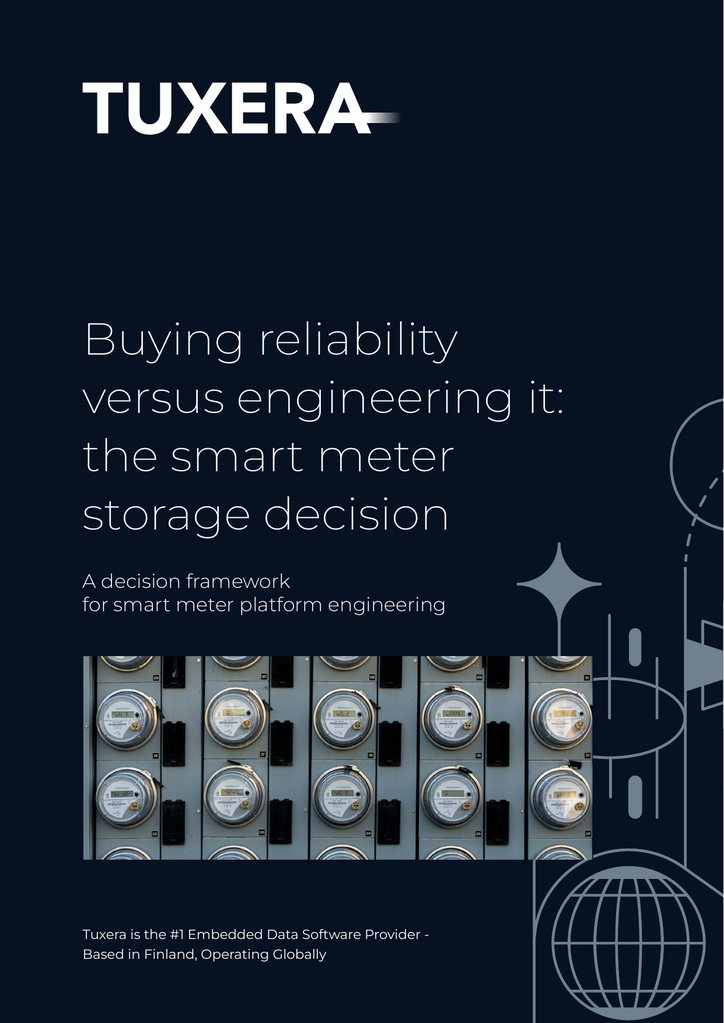
Remote diagnostics depend on useful evidence. When an endpoint behaves unexpectedly, engineers may need to understand what happened before the failure. Depending on the system, useful persistent information can include reset history, failure events, diagnostic records, configuration state, firmware version, update results, or recent operating conditions. That information improves traceability: a remote team that can review errors, active firmware, relevant configuration, and the last successful operation has more evidence than a team working with an endpoint that simply appears offline.
Persistent diagnostic data does not guarantee remote resolution. Loss or inconsistency of useful diagnostic state does, however, reduce the information available for remote troubleshooting and may increase the likelihood that physical inspection is needed. Operational efficiency is therefore influenced not only by whether a device fails, but also by whether support teams can obtain enough reliable information to determine what should happen next.
The role of reliable storage becomes clearer when the previous failure paths are considered together. Device-side persistence can support predictable recovery after interruption, valid operating state, retained diagnostic and event information, firmware recovery, local buffering during temporary communications loss, and continued access to information used by remote management. None of these capabilities means storage software can ensure complete AMI availability. Communication networks, head-end and meter data management systems, meter hardware, firmware, security architecture, and operational processes all contribute to system reliability. Embedded storage is one layer. Its role is to preserve and recover the endpoint state required for the wider AMI system to continue managing the device remotely, and when that works as intended, more endpoint problems stay within existing remote processes instead of escalating into truck rolls.
A development team should not validate endpoint storage only under normal laboratory conditions. Testing should reflect the failure scenarios most likely to affect remote serviceability. That can include interruption during active writes, power loss during startup, interruption during recovery, and a second interruption while recovery is already underway. Firmware scenarios can include interruption during image staging or activation, unsuccessful updates, recovery from incomplete update state, and rollback where the architecture supports it. Communication loss should be tested separately: if the endpoint must preserve local data while disconnected, validation should cover growing queues, higher storage utilization, restored connectivity, aged media, and field-representative temperatures.
The strongest testing combines relevant conditions. Aged media, high storage utilization, active logging, elevated temperature, and an interrupted firmware update together may reveal recovery behavior that individual thermal, endurance, or update tests do not. The objective is not to reproduce every possible field event. It is to test the combinations that could prevent the endpoint from returning to a remotely manageable state. All of these stress tests should imitate real-life scenarios, so that the endpoints in the AMI infrastructure are resilient enough to last 15 to 20 years in the field. The related article on utility device data integrity validation describes how to structure that evidence over a 10 to 20 year lifecycle.
Pass criteria should reflect the actual AMI operating model. A device that restarts but requires an extended recovery period before communications resume has very different operational implications from one that returns to service within its required recovery window. Likewise, a meter that reconnects but loses critical diagnostic state may be technically online while providing little insight into why the failure occurred. Useful measures can include recovery success, recovery duration, time until remote communications resume, retention of required state, firmware update and recovery results, availability of diagnostic information, buffered-data reconciliation where supported, recurring storage errors, storage latency, and media-health indicators where exposed.
There is no universal acceptable value for these metrics. The target depends on the meter design, utility requirements, communications architecture, and operational processes. The important point is to measure outcomes connected to remote serviceability rather than stopping at “the device powered back on.”
A credible AMI reliability strategy needs clear boundaries. Embedded storage cannot repair failed radios or meter hardware, restore an external communications network, correct wiring or installation problems, resolve safety issues, inspect tampering, or replace failed equipment. Those situations can still require a truck roll regardless of how reliable the persistence layer is, and storage cannot compensate for every software defect or poorly designed remote-management process. The objective is not to eliminate field service. It is to keep avoidable persistence-related problems from becoming field visits when the endpoint could otherwise remain recoverable and remotely manageable, and to develop systems that are resilient enough to sustain most field failures and recover safely while continuing to offer remote data access. Reducing truck rolls should therefore be treated as a system-level operational goal rather than a promise attached to one software component.
Repeated field recovery can be a sign that the persistence design deserves another look. Warning signs include increasing recovery time, recurring persistent-state errors, failed remote firmware recovery, storage-related incidents that appear later in deployment, growth in write activity after firmware changes, insufficient local buffering, or declining media-health margin where the technology exposes useful indicators. At that point, the investigation should not focus only on replacing the storage media. The team may need to reconsider the filesystem, flash-management layer, update architecture, write patterns, data-retention policy, available capacity, recovery process, or underlying storage technology. The correct change depends on the failure mechanism.
Which layer that points to depends on the endpoint. Most meters are MCU-class designs where the file system has to recover from power loss within a small RAM and code budget, which is what Tuxera EdgeFS is built for; Tuxera NitroFS covers larger data workloads on platforms with more resources, and Tuxera FlashFX Tera manages raw NAND or NOR beneath the file system. Managed storage and raw flash place different responsibilities on the software stack, so selection should start with what must persist, required recovery time, remote-operation state, storage media, and lifecycle behavior.
AMI creates operational efficiency by allowing appropriate data collection, control, diagnostics, configuration, and firmware management to happen remotely. That value depends partly on the endpoint remaining usable enough for remote systems to continue managing it. Embedded storage should support that operating model by preserving the critical local data and state required for recovery, reconnection, diagnosis, updates, and continued operation. It cannot remove every reason for field service. But reliable embedded storage software for AMI can reduce the risk that avoidable device-side persistence problems become truck rolls when the endpoint could otherwise remain remotely recoverable and manageable.
RELATED ARTICLES
A smart meter can reboot, reconnect, and appear healthy while its most recent data is missing, stale, or inconsistent. This...
Selecting smart meter storage software means understanding how the complete persistence stack behaves across the product lifecycle. This 12-point checklist...
Utility field devices stay deployed for a decade or more, so engineering teams cannot wait to find out whether persistent...

A utility field device can pass qualification and still develop storage problems years later. This article explains the mechanisms behind...
Suggested content for: