


Smart meter data loss after power events and brownouts
A smart meter can reboot, reconnect, and appear healthy while its most recent data is missing, stale, or inconsistent. This...
We are here to help
Have a question or need guidance? Whether you’re searching for resources or want to connect with an expert, we’ve got you covered. Use the search bar on the right to find what you need.

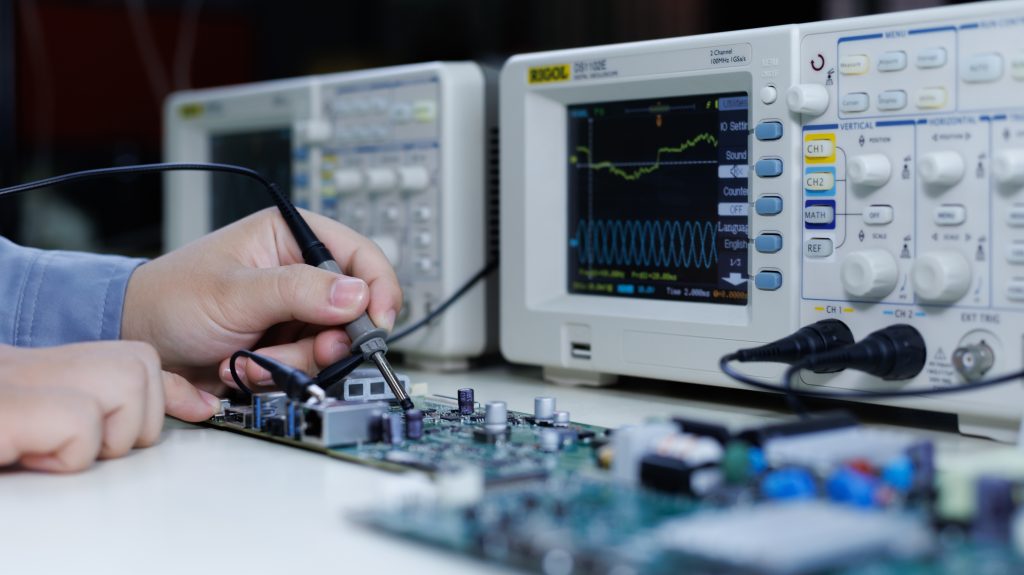
A smart meter may remain deployed for years while continually recording, updating, retaining, and transmitting information. Depending on the meter design, that data can include energy consumption, cumulative registers, timestamps, event records, configuration, diagnostics, firmware state, and other operational information. That makes selecting smart meter storage software more than a question of whether a filesystem can read and write data on a new development board. Engineers need to understand how the complete persistence stack behaves across the expected product lifecycle, including accumulated writes, power interruptions, firmware changes, storage utilization, temperature, recovery, and the characteristics of the underlying nonvolatile memory.
This checklist focuses on storage software running inside or directly supporting the smart meter itself. It is different from a meter data management system, cloud platform, or other back-office software that receives and processes meter data after it has been transmitted through the utility network. Storage evaluation therefore needs to begin with the workload and persistence requirements inside the meter. For the wider picture of device-side storage for meters, see Tuxera smart energy solutions.
Twelve checklist items follow, with a summary table at the end.
Before comparing products or filesystem features, define what the meter actually needs to persist. Smart meter data can include cumulative consumption data, measurement records, configuration, outage events, diagnostic information, security-related state, timestamps, and firmware or update information. Some meter models may also record feed-in information, consumption patterns, or other values used by energy management and control systems.
These data classes should not automatically receive the same persistence policy. A cumulative register may need stronger durability than temporary diagnostic data. Configuration may change infrequently but need long retention. Event records may arrive in bursts. Current electricity consumption readings may be displayed or transmitted quickly, while other meter logs remain stored locally until a network connection becomes available. The questions to settle first are what data must become durable immediately, what can safely remain buffered, and how frequently each class of information is updated. Without that workload definition, there is no meaningful basis for evaluating storage software.
Storage qualification should represent the workload expected across the meter lifecycle. A device that starts with modest logging requirements may operate differently after later software releases. Firmware can increase telemetry, retain more diagnostic information, add new functions, alter checkpoint frequency, or introduce additional local analysis, and logs and update files can increase storage utilization over time. The lifecycle model should therefore account for expected deployment duration, write frequency, update size, data retention policies, firmware behavior, and likely storage usage later in the product life. Storage that has substantial headroom when new may have different operating margins after accumulated writes and higher utilization. The check: has the storage design been modeled against the workload expected later in the meter lifecycle, rather than only at initial deployment?
Application-level write volume does not necessarily reveal how much physical activity occurs in flash memory. Depending on the architecture, a logical update may also require filesystem metadata changes, block erasure, data relocation, mapping updates, garbage collection, or other internal management operations. This difference is commonly described as write amplification. A smart meter may appear to write relatively little consumption data, yet frequent updates to counters, timestamps, logs, and metadata can create more physical storage activity than the expected workload would suggest.
The relationship depends on the media, filesystem, flash-management layer, controller, available working space, and access pattern, so endurance planning should consider the behavior of the complete storage stack rather than relying only on application-level byte counts. The check: has physical storage activity been measured or credibly estimated under a representative meter workload?
Flash wear-out is one of the two reasons meters fail before their design life. Our webinar Why smart meters fail early, and what we can do about it covers the mechanism and the software choices that change the outcome, with a customer project where product lifetime rose from under 10 years to more than 25.
The engineering team needs a defined scope and rules for the scenarios and data that must survive an interruption. A cumulative meter value may have a different durability requirement from a diagnostic record. Configuration may need to remain valid through power loss. An event record may need to preserve its relationship with a timestamp or associated state. This is particularly relevant when locally stored meter data later contributes to billing, operational analysis, grid monitoring, forecasting, or other downstream processes. The check: what can remain buffered, and what must already be durable if power disappears at that moment? Defining that boundary makes it possible to evaluate recovery and data-integrity behavior against a concrete requirement.
A meter restarting successfully does not prove that its storage recovered correctly. After an interrupted operation, the system may need to restore metadata, validate state, reconcile partially completed updates, or perform other recovery work, and the exact process depends on the data persistence architecture. The engineering team should determine whether the meter returns to a known-good state, how long that process takes, and what happens if power disappears again while recovery is still underway. Recovery time matters in its own right: a storage system that eventually restores consistency may still be unsuitable if the process exceeds the meter’s defined availability or timing requirement. The deeper outage and brownout mechanics are covered in smart meter data loss after power events and brownouts. The check: can the storage system return to the required known-good state within the recovery and integrity limits defined for the meter?
Smart meter state often consists of related information rather than isolated records. A measurement may belong with its timestamp, a cumulative register may depend on a sequence value, configuration may be associated with a version marker, and an outage event may require related metadata. If only part of that state is updated before an interruption, every individual value may still be readable while the overall state is logically inconsistent. The application should therefore define which values must remain consistent with one another, and the persistence design should ensure that each such group is committed as a single atomic update, so that after an interruption the meter recovers either the complete previous state or the complete new state. The check: does the persistence design provide the consistency behavior required by the application under the defined and tested failure conditions?
Depending on the architecture, that may involve transactions, atomic updates, controlled commit points, journaling, or other persistence mechanisms. Where transactional persistence characteristics are required, Tuxera EdgeFS and Tuxera NitroFS both use a copy-on-write design with Dynamic Transaction Point™ technology. EdgeFS is generally the closer fit for MCU-class meters running an RTOS or bare-metal firmware within tight RAM and code budgets, while NitroFS is designed for higher-end SoC platforms with heavier data workloads. In either case, the team should evaluate fit against the target architecture and resource profile.
Not every smart meter uses the same type of nonvolatile storage. A design may use MCU internal flash, NOR flash, raw NAND, managed NAND such as eMMC, removable industrial flash, or another persistent-storage technology. That distinction matters because responsibility for flash management can sit at different layers of the system. With raw flash, more responsibility may reside in the software stack. Managed storage can move functions such as mapping, wear management, error correction, or block handling into the device controller. The stack runs from application to filesystem to flash-management layer (a software FTL, where used) to the flash controller (an MCU interface or device-internal) to storage media, and engineers should determine which layer is responsible for wear leveling, ECC, bad-block management, garbage collection, mapping, and flash translation. Where a meter architecture uses raw NAND or NOR and requires a dedicated flash-management layer, Tuxera FlashFX Tera can be evaluated in that context. Not every smart meter design requires the same flash-management approach.
Endurance and retention are connected, but they represent different engineering requirements. Endurance concerns the impact of repeated program and erase activity on the storage media. Retention concerns whether previously written information remains readable for the required period under specified conditions. A device can have relatively low write activity but demanding retention requirements for configuration or important meter state, while another design may generate enough persistent writes that endurance becomes a major constraint. The correct assessment depends on the selected media, accumulated writes, required retention time, and operating conditions. Generic statements such as “this flash lasts X years” or “supports X writes” should not replace component-specific and workload-specific analysis.
Electricity meters can be installed in environments where storage experiences changing temperatures over long periods, and the media may accumulate substantial program and erase activity before reaching the later stages of the product lifecycle. Testing should therefore consider how temperature interacts with storage age, accumulated writes, retention requirements, error-correction activity, and available storage margin. The check: does the storage stack remain inside its required operating envelope under conditions representative of an aged meter? This is more useful than treating a component’s rated temperature range as proof of long-term system behavior.
Persistence requirements are only one part of product selection. The software also has to fit the meter’s actual hardware and operating environment, which means looking at RAM usage, code footprint, CPU overhead, supported RTOS environments, bare-metal requirements where applicable, storage interfaces, platform portability, and integration effort. A technically strong storage solution is not suitable if it exceeds the resources available on the target device. The check: does the storage software meet the required persistence behavior within the CPU, memory, RTOS, and integration limits of the target meter?
The storage hardware can remain unchanged while its workload changes significantly. A firmware update may increase logging frequency, add telemetry, change checkpoint behavior, retain more diagnostics, stage larger OTA packages, or require rollback data. Those changes can affect both write volume and available working space, so storage qualification should not be treated as a one-time activity completed when the original firmware is released. When persistent-write behavior changes materially, engineering teams should revisit the write budget, endurance assumptions, utilization, performance, and recovery testing. A meter in later years of deployment may exercise storage very differently from the device originally tested in the development project.
Where the architecture supports it, monitoring can provide useful evidence that storage behavior is changing before it becomes a field incident. Possible signals include consumed lifetime estimates, corrected-error trends, retired blocks, spare capacity, storage utilization, write latency, recovery duration, filesystem repair activity, and temperature history. Not every technology exposes the same data, so the monitoring strategy should be based on what the selected storage media and software can actually observe. The objective is not to collect every available metric. It is to monitor indicators that can reveal whether the system is moving away from the operating conditions validated during development.
The final criterion is evidence from representative testing. A storage stack should not be qualified only with new media, low utilization, light write activity, stable power, and room-temperature laboratory conditions. Depending on the meter requirements, testing may need to include production firmware, representative smart meter data, realistic write patterns, aged or high-write media, high storage utilization, expected field temperatures, abrupt power loss, brownouts, interruption during recovery, and firmware upgrade scenarios. The conditions should also be combined where relevant, because a system may pass endurance, thermal, and power-fail tests independently yet behave differently when aged media, high utilization, elevated temperature, active logging, and a power interruption occur together. The check: has the storage software been validated under conditions that represent the meter later in its expected field life, not only when it is new? The related article on utility device data integrity validation describes how to structure that lifecycle evidence.
| Evaluation area | Core question |
|---|---|
| Workload | What information does the meter persist, and how frequently is it updated? |
| Lifecycle | Does validation represent the expected lifetime workload? |
| Write endurance | How do logical writes translate into physical storage activity? |
| Power-fail durability | What must already be durable when power disappears? |
| Recovery | Can interrupted operation return to the required state within the required time? |
| Data integrity | Can related critical state remain consistent under the defined failure model? |
| Flash architecture | Which layer manages wear leveling, ECC, bad blocks, mapping, and flash translation? |
| Retention | Are retention requirements tested under representative conditions? |
| Temperature and aging | Does qualification represent late-life field operation? |
| Resources | Does the software fit the meter’s RAM, CPU, RTOS, and platform constraints? |
| Firmware lifecycle | Are storage assumptions revisited after persistent-write behavior changes? |
| Monitoring | Can meaningful storage degradation be identified before a field incident? |
| Validation | Are realistic combined stresses included in testing? |
The correct smart meter storage software is not simply the option that can read and write data successfully on a new development board. It needs to fit the meter’s data model, storage media, resource limits, recovery requirements, endurance and retention expectations, and firmware lifecycle, and it needs to be evaluated under conditions that represent how the device is expected to operate later in deployment.
Most meters are resource-constrained MCU designs running an RTOS or bare-metal firmware, which is where Tuxera EdgeFS fits; NitroFS covers larger SoC-class systems with heavier data workloads on general-purpose operating systems, and FlashFX Tera handles raw NAND or NOR flash management. The correct combination depends on the meter design. A managed-flash architecture places different responsibilities on the software stack than a raw NAND design, and a meter preserving a small amount of critical state can require a different approach from one storing larger volumes of smart meter data or performing more local processing.
The selection process should remain requirement-led: define the workload, define the durability boundary, understand the storage architecture, model endurance and retention, establish recovery requirements, revalidate after firmware changes, and test realistic late-life conditions.
RELATED ARTICLES
A smart meter can reboot, reconnect, and appear healthy while its most recent data is missing, stale, or inconsistent. This...
Utility field devices stay deployed for a decade or more, so engineering teams cannot wait to find out whether persistent...
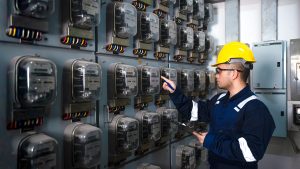
AMI keeps utility operations remote only while the endpoint stays recoverable and manageable. This article follows five persistence failure paths...
A utility field device can pass qualification and still develop storage problems years later. This article explains the mechanisms behind...
Suggested content for: