


Over-the-air (OTA) update failures in vehicles: storage risks that can cause bricking
OTA updates rewrite critical vehicle state under real-world stress. Learn the storage failure modes that brick units, and a power-cut...
We are here to help
Have a question or need guidance? Whether you’re searching for resources or want to connect with an expert, we’ve got you covered. Use the search bar on the right to find what you need.

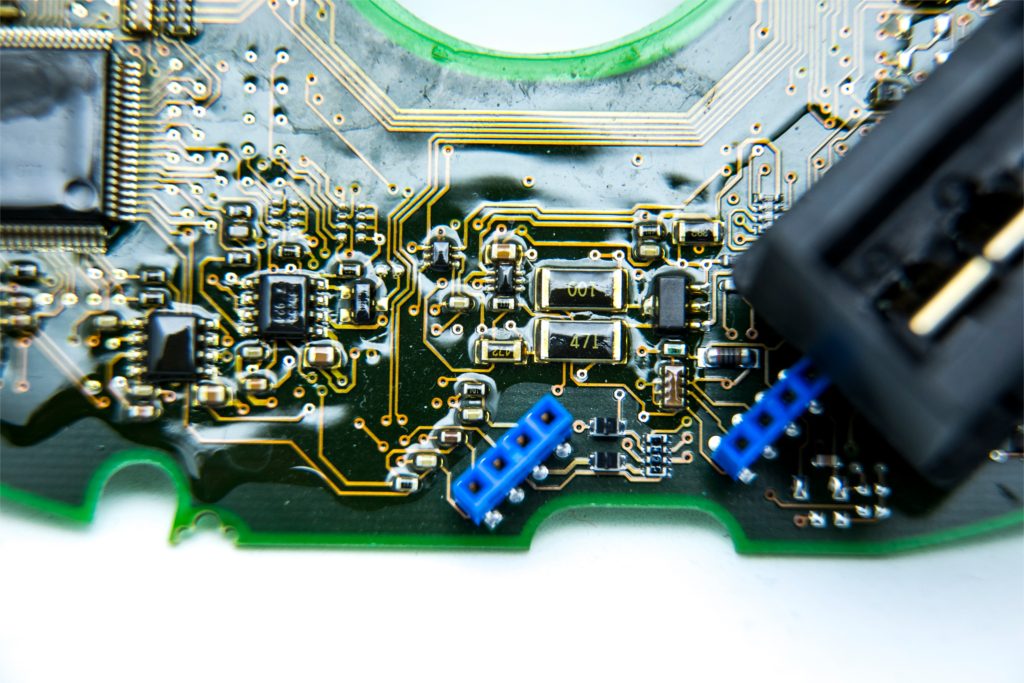
Modern electronic control units (ECUs), domain controllers, and vehicle compute platforms now store far more than simple local data, holding configuration data, event logs, calibration files, update states, diagnostic records, model parameters, and application data. As vehicles become more software-defined, the stored state becomes part of how the system starts, updates, recovers, and performs over time.
This makes ECU storage reliability testing a production risk question, not only a component quality check, because a fresh device in a clean lab setup can pass basic read, write, and reboot tests while still failing under interruption, aging, thermal cycling, voltage variation, mechanical stress, mixed workloads, or long-term fleet conditions.
As smarter vehicles depend on more local data and software-controlled behavior, ECU storage becomes part of the physical AI data layer: the sensor-to-action path from input to decision to actuation, where determinism, integrity, and recoverability must hold under real-world stress across the device lifetime.
If that layer drifts, the cost can appear later as failed updates, warranty claims, field recalls, longer diagnostics, or vehicles that recover unpredictably after power events. The goal of ECU storage reliability testing is therefore to turn storage reliability from an assumption into evidence.
This article explains what ECU storage reliability testing should cover, why fresh-device testing is not enough, how to set practical pass/fail criteria, and what evidence engineering and program teams should ask for before production.
ECU storage reliability testing is the process of validating whether storage can preserve state, protect critical data, recover predictably, and maintain expected performance under real vehicle conditions, which means testing more than a simple write, read, and reboot sequence.
A reliable ECU storage layer should be able to preserve critical state, recover from interruption, avoid corrupted metadata, maintain predictable performance, and support controlled update behavior. In addition, it should do this not only when hardware is new but also after sustained writes, repeated resets, temperature exposure, voltage variation, and long-running use.
In practice, ECU storage reliability testing should answer several questions:
This differs from checking whether storage works once; the goal is to validate behavior under the conditions most likely to expose weakness.
ECU storage reliability testing should connect to the wider validation process rather than sit apart from functional testing, in-circuit testing, hardware-in-the-loop testing, or the qualification envelope already used by the program.
Functional testing checks whether the intended function behaves as expected, which for storage may include whether data can be written, read, updated, and recovered correctly during normal operation.
In-circuit testing checks the behavior of electronic components and circuit-level interfaces, and for storage, this can help identify manufacturing, hardware interface, or voltage-related concerns before deeper software validation begins.
Hardware-in-the-loop testing simulates vehicle conditions around the ECU while the real hardware is running, which is useful because storage failures often appear only when software, hardware, timing, voltage, temperature, and connected interfaces operate together.
Storage reliability testing adds another layer, asking whether the storage system continues to behave predictably when the ECU is exposed to combinations of stress conditions, not only ideal operating conditions.
Where relevant, teams should align storage validation with the standards and qualification frameworks already used by the program. Examples may include ISO 16750 and LV 124 for electrical and environmental behavior, AEC-Q100 for component qualification context, ISO 26262 for safety-related development, JEDEC endurance methods for flash behavior, and UNECE R156 for update process expectations in regulated markets.
The point is not to turn the article or the test plan into a standards checklist, but to ensure storage evidence lines up with the validation context the program already trusts.
Fresh-device testing is useful, but it is not enough for automotive electronics because storage behavior changes over time. Flash memory ages: program/erase cycles consume endurance, retention margins can shrink, disturb effects can accumulate, and temperature exposure can speed up wear. Cross-temperature behavior can matter too, since data is sometimes written under one thermal condition and read under another.
As raw bit error rates increase, the storage stack may need more correction effort, read retries, or internal recovery work, and that added work often appears as wider tail latency, longer recovery time, or less predictable performance rather than one clean failure.
Software behavior also changes the storage load, as logs grow, metadata expands, databases checkpoint, update markers change, and applications write state while filesystems update their own metadata and device-level garbage collection and wear leveling add background work. The result is not one cause but a stack of mechanisms that compound across the application, database, filesystem, flash management layer, and storage device.
Therefore, average performance measurements can be misleading. A storage layer may show acceptable throughput in a short test while still producing rare stalls, long recovery times, or inconsistent behavior under interruption, and those few failures matter in vehicles because they can collide with startup windows, update windows, watchdog thresholds, or safety-related service timing.
A fresh device also tends to hide lifecycle problems. If testing does not include aged devices, sustained writes, realistic data growth, thermal cycling, voltage variation, and repeated interruption, teams may only observe failure patterns after deployment, and that is too late, since by that point a storage issue may appear as a boot problem, a failed update, a diagnostic fault, an intermittent application failure, or a field recovery issue.
A practical ECU storage reliability test plan should include interruption, integrity, recovery, performance, endurance, environmental exposure, and update behavior. Each area exposes a different class of risk.
Power interruption testing checks what happens when the system loses power during sensitive storage activity. This should include interruptions during normal writes, boot activity, update state changes, metadata updates, and repeated reset cycles, as well as brownouts and voltage variations where those conditions apply to the ECU and vehicle platform.
The goal is not only to see whether the device restarts, but whether it restarts with a clean state, consistent metadata, bounded recovery time, and predictable behavior.
Power-loss testing is where test design decides whether the results mean anything. Our white paper covers how to build a failure sequence that produces usable evidence rather than a single pass or fail.
A pass should mean the system returns to a known-good state within a defined time bound, not that the device eventually boots after unpredictable repair or manual intervention.
Power-loss testing should also separate two different costs. The visible cost is recovery time: scanning, reconciliation, file system checks, remounting, rebuilding state, or waiting for the system to repair itself. The hidden cost is integrity risk: a committed state may be missing, metadata may be inconsistent, or a small marker may no longer represent the true state of the system.
For some flash technologies, power loss during programming can also create risks beyond the page being written, because in multi-level cell designs, upper-page programming can affect previously written lower-page data. That is one reason high-integrity regions may use SLC or pSLC behavior where appropriate and supported by the storage architecture.
Data integrity testing validates whether critical data remains accurate and usable after stress, interruptions, repeated writes, and aging. In an ECU, critical data may include configuration files, calibration data, event logs, checkpoints, update markers, diagnostic records, and model parameters. Some of these files may be small yet carry large consequences, since a single corrupted marker can affect boot selection, update rollback, recovery flow, or diagnostic interpretation.
Integrity testing should check whether files are complete, metadata remains consistent, and state markers can be trusted after failure events. It should also test whether the system can detect and handle corrupted or incomplete data rather than continuing in an unsafe, stale, or undefined state.
This is where the physical AI data layer becomes practical, because if the vehicle cannot trust persisted state, then the path from sensing to decision to actuation inherits that uncertainty. Storage is not the whole system, but unreliable persistence can undermine the systems that depend on a clean state.
Recovery testing checks what the system does after something goes wrong, including mount time, repair time, reconciliation behavior, and whether the system can return to a known-good state without manual repair. It should also include repeated recovery cycles, because one successful recovery does not prove stable behavior over time.
A useful recovery test does not stop at “the system booted.” It checks whether the right version loaded, whether the critical state is consistent, whether recovery completed inside the required time window, and whether the next boot behaves normally.
If recovery time grows unpredictably across repeated cycles, that should be treated as a fail signal, even if the device eventually starts. For startup, update, or hard timing paths, “boots eventually” is not a reliable pass condition: a vehicle program needs bounded recovery behavior that can be validated, repeated, and supported in the field.
Performance consistency testing checks whether storage behavior remains predictable under real workloads, including read and write latency, I/O pressure, logging pressure, application activity, and background maintenance. Tail latency matters because rare slow operations can cause timeouts even when average performance looks acceptable.
For trend monitoring, p95 and p99 latency can be useful, while for watchdogs, startup windows, update paths, and safety-related timing, p99.9 latency and worst-case latency are often more relevant. These far-tail events are where garbage collection, read retries, error correction escalation, cache flushes, durability barriers, and mixed workload contention can cause visible failures.
In an ECU, performance problems may appear as slow boot, delayed logging, service timeouts, or application stalls, and under mixed workloads these effects can be harder to trace because storage pressure may coincide with compute, network, interface, or application pressure.
Where shared compute platforms are involved, this also relates to freedom from interference, since storage behavior from one function should not create unbounded timing effects for another function that depends on predictable service.
Testing should measure behavior during realistic operating windows, including startup, logging bursts, diagnostic activity, update-related writes, and, where relevant, advanced driver assistance systems data activity.
ECUs do not operate in controlled lab conditions once they are in vehicles, where they may face high temperatures, low temperatures, temperature swings, vibration, and mechanical stress. Thermal cycling can expose timing and reliability issues that do not appear at room temperature, while mechanical stress can affect hardware, circuit behavior, connectors, and interfaces. Storage reliability testing should account for these conditions where they are part of the expected operating environment.
The goal is not to replace environmental or mechanical validation, but to make sure storage behavior is evaluated inside the environmental conditions the ECU is expected to survive.
Endurance testing validates whether storage remains reliable after sustained writes and long-term use. This should include log rotation, repeated write cycles, metadata growth, aged-device testing, and behavior near realistic capacity levels, and the test should reflect how the ECU will actually use storage rather than only a generic write pattern.
Aging matters because storage behavior can change gradually: recovery time can increase, performance variance can widen, background maintenance can become more visible, and data retention margin can shrink. These changes may not cause immediate failure, but they can make the system less predictable, which is why a strong validation plan should include both fresh and aged devices.
Update reliability testing checks whether update-related storage state behaves correctly, including staging, activation, rollback, first boot after update, post-update verification, and repeated interruptions during update state changes. Over-the-air (OTA) updates are one example where this matters, but the same logic applies to workshop and service updates.
In many designs, the bootloader and update framework own slot selection, activation, and rollback. A/B partitioning and update frameworks can handle the clean update path, but they still depend on small pieces of persisted state being committed correctly and surviving interruption.
The key requirement is predictable state transition: either the update completes and validates, or the system returns to a known-good version. Partial states, repeated rollback loops, or unclear version selection should be treated as serious reliability risks.
In regulated markets, this also maps to update process expectations such as UNECE R156. The storage layer is not the whole update system, but it must support a safe and recoverable update process.
A practical validation plan starts with the real workload:
Pass/fail criteria should be defined before testing starts, specific enough for engineering teams to validate and clear enough for program teams to understand.
The exact values depend on the ECU, function criticality, storage technology, software architecture, and program requirements, so a safety-related ECU will not use the same limits as a non-critical infotainment function. The principle, however, is the same: define what predictable behavior means before the test begins.
| Test area | Example pass criteria | Example fail signal |
|---|---|---|
| Interrupted write | Zero metadata corruption across the defined power-cut sequence | Inconsistent metadata or incomplete state after reset |
| Abrupt reset | Recovery to a known-good state within a fixed time bound | Recovery time grows unpredictably across cycles |
| Voltage variation | Storage remains consistent inside the defined operating range | Data corruption or repeated recovery outside expected behavior |
| Thermal cycling | Data, recovery time, and latency remain inside defined limits across temperature exposure | Failures appear only after temperature swings |
| Update rollback | Previous known-good version restores without manual repair | Rollback loops, oscillation, or unclear version selection |
| Mixed workload | p99.9 read/write latency stays below the ECU timeout budget | Background maintenance causes timing misses |
| Aged device | Behavior remains inside lifecycle limits after target lifetime writes | Performance drift breaks startup, watchdog, or update timing windows |
| Log growth | Storage remains stable as logs rotate and metadata grows | Metadata growth causes stalls, corruption, or unbounded recovery |
| Data retention | Stored state remains readable and correct after rated retention conditions | Bit errors exceed correction margin or require unbounded retries |
| Repeated reset cycles | No unbounded recovery growth across the defined number of reset cycles | Each reset adds recovery cost or creates inconsistent state |
These examples should be adapted to the program. The important point is to avoid vague pass criteria such as “works,” “boots,” or “recovers.” A useful pass condition includes a state requirement, a timing bound, and a repeatability requirement.
Several mistakes appear often in storage reliability validation:
Evaluation should be evidence-led, since storage claims are useful only if they can be validated under the conditions that matter to the vehicle.
Program teams should ask for:
That list is a reasonable thing to ask of any storage vendor, including us. When evaluating any storage layer, the useful question is not only whether the stack supports the required platform, but whether the vendor can put evidence on the table: recovery, endurance, retention, and performance behavior under interruption, aging, thermal cycling, voltage variation, and mixed workloads.
This is where validation artifacts matter, because repeatable results, clear test assumptions, observed failure behavior, and integration guidance help teams decide whether the storage layer is ready for production conditions. Validated recovery, endurance, and performance behavior are what turn storage from a component claim into part of a dependable physical AI data layer.
ECU storage reliability testing is not only a component-level quality check; it helps prove whether the data layer can support predictable behavior in actual vehicles. This matters more as software-defined vehicles, advanced driver assistance systems, and data-driven automotive applications become more common, because the more a vehicle depends on local data and software state, the more important predictable storage behavior becomes.
Reliable storage does not make the entire vehicle safe by itself, but unreliable storage can undermine vehicle systems that depend on a clean state, bounded recovery, and consistent performance.
In this context, ECU storage reliability testing is not only testing whether a device can write and read data, but testing persistence, state preservation, recovery behavior, and timing predictability under field conditions. That is how the physical AI data layer earns trust: not by assertion, but by evidence.
ECU storage reliability testing should validate interruption behavior, data integrity, recovery, performance consistency, thermal cycling, aging, data retention, and update reliability. The goal is not to prove that storage works once, but to prove that storage remains predictable under real vehicle conditions.
Strong validation plans define the workload, identify critical states, test fresh and aged devices, include interruption and brownout conditions, simulate relevant vehicle conditions, repeat enough cycles to expose intermittent issues, and convert results into explicit pass/fail criteria. That is what makes ECU storage reliability testing useful for production vehicle programs, turning storage reliability from an assumption into evidence.
RELATED ARTICLES

OTA updates rewrite critical vehicle state under real-world stress. Learn the storage failure modes that brick units, and a power-cut...

Automotive storage rarely fails outright; it drifts. Learn why vehicle storage performance degrades over time, which metrics matter, and how...

In software-defined vehicles, zonal architecture storage requirements are requirements for predictable behavior under stress rather than peak speed. What changes...

Software-defined vehicle cybersecurity is only as strong as the data stored inside the vehicle. Why data at rest is becoming...
Suggested content for: